

Role of Nursery Décor in Child Development
Finding nursery décor that balances both style and substance often leaves British parents searching for more than just pretty accessories. When your child’s first environment has the power to shape early learning and nurture emotional well-being, every detail matters. Thoughtful design turns a child’s space into a dynamic learning environment, supporting development while cultivating the peaceful atmosphere you want for your family home.
Table of Contents
- Defining Nursery Décor and Its Purpose
- Types of Nursery Décor and Their Impact
- Creating a Calming and Stimulating Environment
- Influence on Emotional Well-Being and Learning
- Safety, Sustainability, and Choosing Wisely
Key Takeaways
| Point | Details |
|---|---|
| Nursery Décor as Developmental Tool | Nursery décor is integral to childhood development, fostering cognitive, emotional, and physical growth through intentional design. |
| Choosing Safe Materials | Prioritise non-toxic, durable materials to ensure safety and sustainability in the nursery environment. |
| Creating Calming and Stimulating Spaces | Balance calming elements with stimulating features to encourage exploration while providing emotional security. |
| Impact of Environment on Learning | A well-designed nursery significantly influences emotional well-being, enhancing learning opportunities and social interactions. |
Defining Nursery Décor and Its Purpose
Nursery décor represents far more than aesthetic choices - it’s a strategic environment designed to support early childhood development. Responsive caregiving environments play a crucial role in nurturing children’s cognitive, emotional, and physical growth through intentional spatial design.
At its core, nursery décor encompasses the physical elements and sensory experiences within a child’s primary living and learning space. These carefully curated surroundings are not merely decorative but serve profound developmental purposes:
- Stimulate sensory exploration and cognitive development
- Create a sense of safety and emotional security
- Support early learning through visual and tactile experiences
- Facilitate motor skill development through interactive design
- Encourage imaginative play and creative thinking
Modern nursery design goes beyond traditional aesthetics, transforming spaces into dynamic learning environments. Early learning spaces are intentionally crafted to empower children, providing spatial flexibility that adapts to their evolving developmental needs.
The purpose of nursery décor extends well beyond visual appeal - it serves as a critical tool for childhood development, creating a nurturing ecosystem that supports a child’s holistic growth. By understanding the psychological and developmental impacts of spatial design, parents can transform nurseries from simple rooms into powerful developmental platforms.
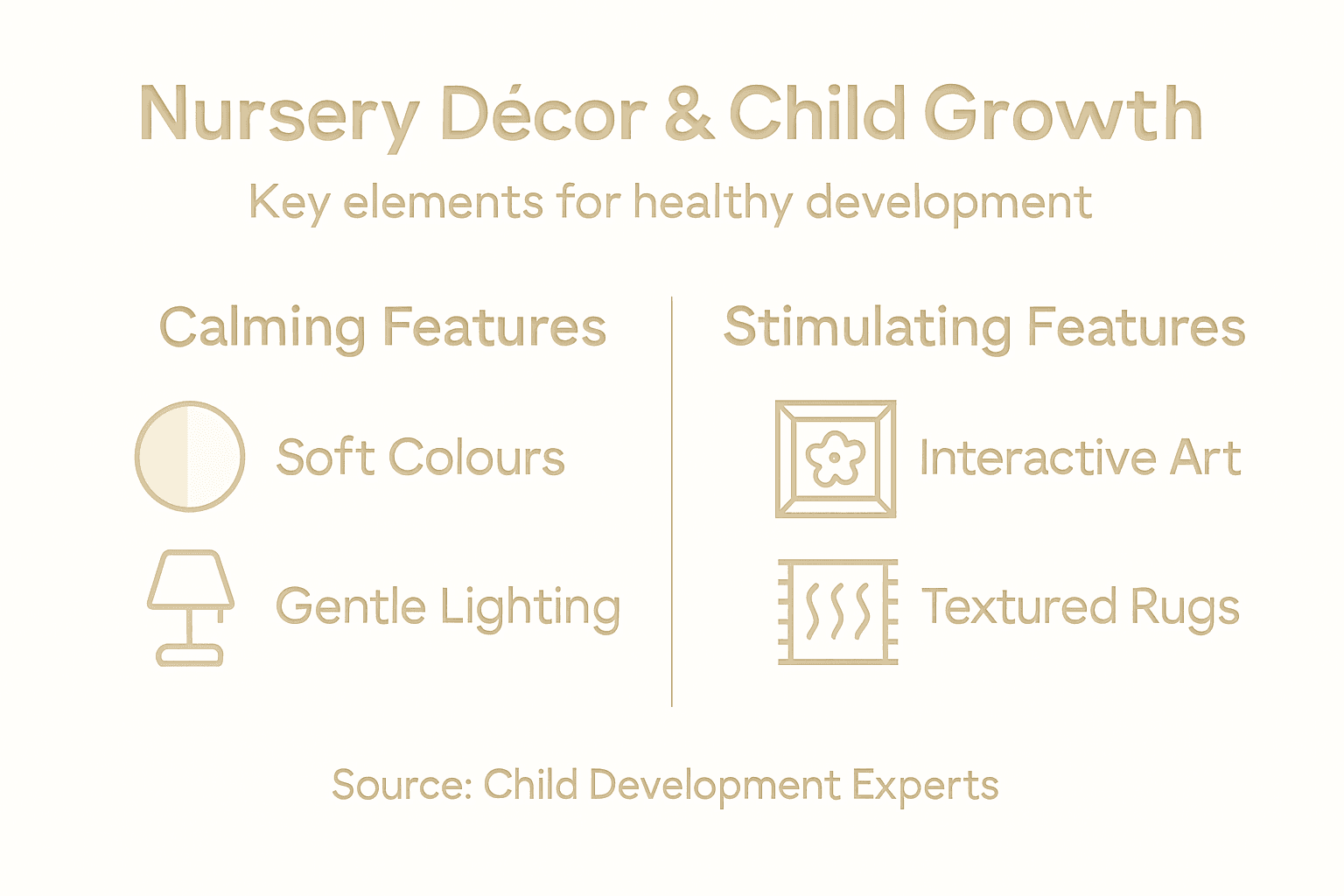
Pro tip: Select nursery décor elements that offer multiple developmental benefits, such as interactive wall art that encourages visual tracking and colour recognition.
Types of Nursery Décor and Their Impact
Nursery décor encompasses diverse styles that profoundly influence child development, each offering unique developmental opportunities. Natural learning environments represent a particularly transformative approach to creating spaces that nurture holistic childhood growth.
Key types of nursery décor include:
- Minimalist Design: Creates calm, uncluttered spaces that reduce sensory overstimulation
- Nature-Inspired Themes: Incorporates natural elements to stimulate curiosity and learning
- Educational Décor: Integrates interactive elements that support cognitive development
- Sensory-Rich Environments: Uses textures, colours, and materials to engage multiple senses
- Cultural Heritage Designs: Connects children with familial and cultural backgrounds
Forest kindergarten approaches demonstrate how thoughtful décor can transform learning spaces. These environments prioritise natural materials and open-ended design, encouraging children to explore, create, and develop critical problem-solving skills through imaginative play.
Modern nursery design goes beyond aesthetic appeal, serving as a critical developmental tool. Intentional spatial design can support emotional regulation, cognitive growth, and sensory exploration, transforming nurseries from simple rooms into powerful learning platforms that adapt to a child’s evolving developmental needs.
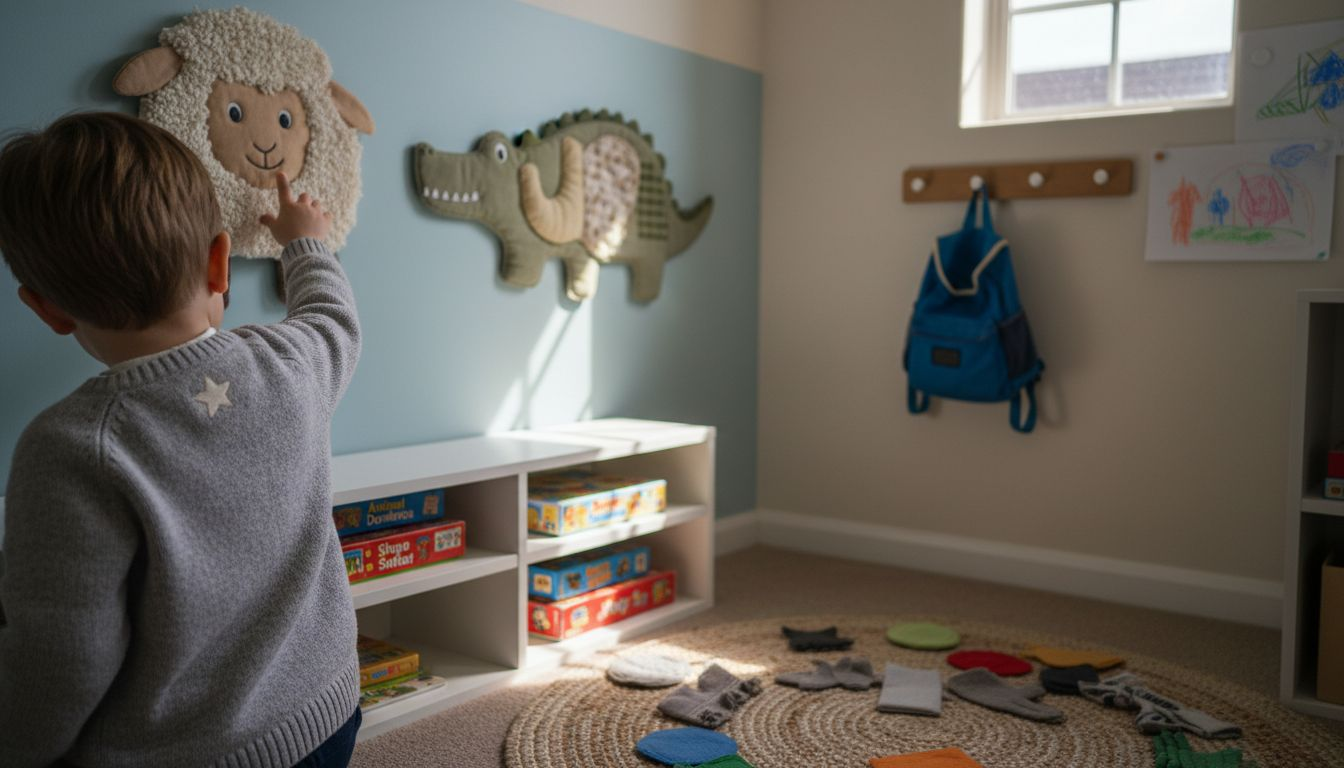
Below is a comparison of different nursery décor styles and their unique developmental impacts:
| Décor Style | Developmental Focus | Ideal For |
|---|---|---|
| Minimalist | Emotional regulation | Sensitive or easily overwhelmed children |
| Nature-Inspired | Curiosity and exploration | Fostering love of outdoors |
| Educational | Cognitive skill building | Stimulating early learning |
| Sensory-Rich | Sensory integration | Diverse sensory preferences |
| Cultural Heritage | Identity and belonging | Connecting with family traditions |
Pro tip: Select nursery décor elements that offer multi-sensory experiences, encouraging exploration and supporting different developmental domains simultaneously.
Creating a Calming and Stimulating Environment
Crafting the ideal nursery environment requires a delicate balance between creating a sense of calm and providing stimulating developmental opportunities. Child-centered design principles emphasise the importance of spaces that feel both secure and inspiring for young learners.
Key elements of a calming and stimulating nursery environment include:
- Colour Palette: Soft, neutral tones that reduce overstimulation
- Lighting: Gentle, adjustable lighting that creates different mood zones
- Texture Variety: Mixed sensory experiences through fabrics and materials
- Flexible Spaces: Areas that can be easily reconfigured for different activities
- Natural Elements: Incorporation of plants, wooden toys, and organic materials
Preschool learning environments demonstrate that thoughtful spatial design can significantly impact a child’s emotional and cognitive development. The goal is to create a nurturing sanctuary that supports exploration, independence, and creative thinking while maintaining a sense of safety and comfort.
Beyond aesthetic considerations, a well-designed nursery acts as a developmental tool. Strategic placement of interactive elements, carefully selected colours, and purposeful spatial organisation can help reduce anxiety, encourage learning, and support a child’s emerging sense of autonomy and curiosity.
For quick reference, see how key nursery elements contribute to both calm and stimulation:
| Element | Calming Function | Stimulating Function |
|---|---|---|
| Colour Palette | Soft shades lower anxiety | Pops of colour spark interest |
| Lighting | Diffuse light soothes mood | Zone lighting energises play |
| Textures | Smooth fabrics relax touch | Mixed materials engage sense |
| Flexible Spaces | Predictable routine fosters security | Novel layouts encourage discovery |
| Natural Items | Nature links comfort | Plants, wood inspire wonder |
Pro tip: Create distinct zones within the nursery that serve different developmental purposes, allowing your child to explore, play, and learn in a structured yet flexible environment.
Influence on Emotional Well-Being and Learning
Environmental factors in child development/04%3A_Section_IV-_Planning_for_Childrens_Learning/07%3A_Social_and_Emotional_Development/7.03%3A_Environmental_Factors_in_Supporting_Social_and_Emotional_Development) play a critical role in shaping children’s emotional landscapes and learning capabilities. The nursery environment is not merely a physical space, but a powerful psychological tool that profoundly influences a child’s emotional and cognitive growth.
Key emotional and learning influences include:
- Emotional Safety: Creating spaces that feel secure and predictable
- Sensory Engagement: Providing varied stimuli that encourage exploration
- Social Interaction Zones: Designing areas that facilitate peer and caregiver connections
- Emotional Regulation Spaces: Quiet corners for managing overwhelming feelings
- Learning Confidence Areas: Environments that encourage independent discovery
Social and emotional development strategies underscore the importance of nurturing environments that support holistic child growth. Emotional intelligence begins with understanding how physical spaces can communicate safety, curiosity, and potential to young minds.
Beyond aesthetic considerations, nursery décor serves as a subtle communication tool. Carefully designed spaces can help children develop resilience, emotional understanding, and a positive relationship with learning, transforming potential anxiety into excitement and curiosity.
Pro tip: Create flexible nursery spaces that allow children to experience different emotional states safely, using design elements that signal both comfort and gentle challenge.
Safety, Sustainability, and Choosing Wisely
Nursery product safety regulations are critical considerations for parents seeking to create secure and nurturing environments for their children. Selecting nursery décor is not merely an aesthetic choice but a profound responsibility that directly impacts a child’s well-being and developmental journey.
Key considerations for safe and sustainable nursery design include:
- Material Selection: Choose non-toxic, hypoallergenic materials
- Chemical-Free Finishes: Opt for low-VOC paints and natural sealants
- Durable Construction: Select items that can withstand active child play
- Rounded Edges: Minimise potential injury risks with smooth design
- Eco-Friendly Manufacturing: Support brands with sustainable production practices
Early care safety guidelines emphasise the importance of creating environments that protect and nurture children. Sustainable design goes beyond environmental considerations, encompassing child health, developmental support, and long-term well-being.
Wise selection involves more than immediate safety; it requires understanding the lifecycle of nursery items. Parents should consider durability, adaptability, and potential for multi-generational use, transforming nursery décor from simple decorative elements into meaningful, responsible investments in their child’s future.
Pro tip: Conduct a comprehensive safety audit of your nursery every six months, checking for potential hazards and updating items as your child grows and develops new skills.
Transform Your Nursery into a Calm and Stimulating Sanctuary
Creating the perfect nursery that supports your child’s emotional well-being and cognitive development can feel overwhelming. The article highlights the importance of intentional nursery décor that encourages sensory exploration, emotional safety, and early learning through carefully chosen colours, textures, and interactive elements. If you want to avoid clutter and overstimulation while fostering a nurturing environment, selecting timeless, high-quality pieces that blend style with developmental purpose is key.
At Little Hive, we understand these challenges and offer a curated collection of nursery décor and children’s essentials designed with gentle aesthetics and durability in mind. Our range includes elegant, non-toxic wooden toys and soothing nursery accessories crafted by skilled artisans in the United Kingdom. These thoughtful items help you create a balanced space that feels safe yet inspiring for your little one.
Explore our selection at Little Hive today to build a nurturing nursery that truly supports your child’s growth. Discover how stylish, sustainable nursery décor can transform your child’s space into a developmental haven. Start now and invest in long-lasting quality that grows with your family.
Frequently Asked Questions
What is the purpose of nursery décor in child development?
Nursery décor serves a critical role beyond aesthetics by creating a nurturing environment that supports cognitive, emotional, and physical growth through intentional design elements.
How can I create a calming and stimulating nursery environment?
To achieve a balance, use soft colour palettes, gentle lighting, varied textures, and flexible spaces, while incorporating natural elements to ensure both calmness and opportunities for exploration.
What types of nursery décor can enhance a child’s learning?
Educational décor, nature-inspired themes, and sensory-rich environments are effective styles that stimulate curiosity, cognitive development, and sensory integration, making them ideal choices for fostering early learning.
What safety considerations should I keep in mind when choosing nursery décor?
Focus on selecting non-toxic materials, ensuring durable construction, avoiding sharp edges, and using eco-friendly finishes to create a safe and sustainable nursery environment.
Recommended
- 7 Inspiring Types of Nursery Decor for Calm, Stylish Spaces – The Little Hive
- Role of Accessories in Nursery – Creating Calm, Sustainable Spaces – The Little Hive
- How to Select Nursery Décor for a Stylish Calm Space – The Little Hive
- How to Set Up Nursery for a Calm and Stylish Space – The Little Hive