

How to Select Nursery Décor for a Stylish Calm Space
Over 80 percent of British parents say a calm nursery helps their child sleep better. With so many choices on the market, finding décor that balances style, sustainability, and serenity can feel confusing. If you want a nursery that soothes your little one and reflects modern British design, this guide uncovers practical steps to create a peaceful sanctuary without sacrificing beauty or eco values.
Table of Contents
- Step 1: Assess Your Nursery Needs And Space
- Step 2: Define A Calming Décor Theme And Palette
- Step 3: Select Sustainable And Safe Décor Pieces
- Step 4: Coordinate Key Accessories And Finishing Touches
- Step 5: Review Your Nursery For Harmony And Quality
Quick Summary
| Main Insight | Clear Explanation |
|---|---|
| 1. Assess Nursery Space Carefully | Measure and design the nursery layout to create functional zones for sleeping, changing, feeding, and playing. |
| 2. Choose a Calming Colour Palette | Use soft neutrals and muted tones to foster a tranquil atmosphere, aiding emotional development. |
| 3. Prioritise Safety and Sustainability | Select non-toxic, sustainable materials for furnishings and décor to ensure safety and environmental responsibility. |
| 4. Enhance with Thoughtful Accessories | Incorporate soft textures and practical storage solutions that align with your calming theme without adding clutter. |
| 5. Review for Harmony and Quality | Conduct a thorough evaluation of the nursery’s elements to ensure a cohesive design and safety features are in place. |
Step 1: Assess your nursery needs and space
Creating a calm nursery requires a thoughtful evaluation of your available space and specific requirements. Your nursery’s layout will dramatically impact its functionality and atmosphere. Early years space requirements demand careful consideration of safety, comfort, and developmental needs.
Begin by measuring your nursery room precisely and sketching a basic floor plan. Consider the room’s natural light, wall positioning, and potential furniture placement. Think about how the space will support multiple activities such as sleeping, changing, feeding, and playing. Create distinct zones that flow naturally while maintaining a sense of organisation. Measure key pieces like cots, changing tables, and storage units to ensure they will fit comfortably without overcrowding the room.
When planning your layout, prioritise a clear pathway for movement and accessibility. Place the cot away from direct sunlight and drafty windows, ensuring a consistent temperature. Allocate specific areas for different activities: a quiet corner for feeding, a changing station with all necessities within reach, and a small play area that can grow with your child.
Expert tip: Photograph your room and use digital planning tools to experiment with furniture arrangements before making final decisions.
Step 2: Define a calming décor theme and palette
Selecting the perfect décor theme and palette is crucial for creating a serene nursery environment that supports your child’s emotional development. Calming environment strategies emphasise the importance of intentional colour and design choices that promote tranquillity and comfort.
Start by choosing a foundational colour palette featuring soft neutrals and muted natural tones. Warm whites, gentle greys, soft sage greens, and pale blues work wonderfully to create a peaceful atmosphere. Consider how different colours interact and aim for a cohesive look that feels harmonious and restful. Natural textures like cotton, linen, and soft wool can add depth and warmth to your chosen palette, creating visual interest without overwhelming the space.
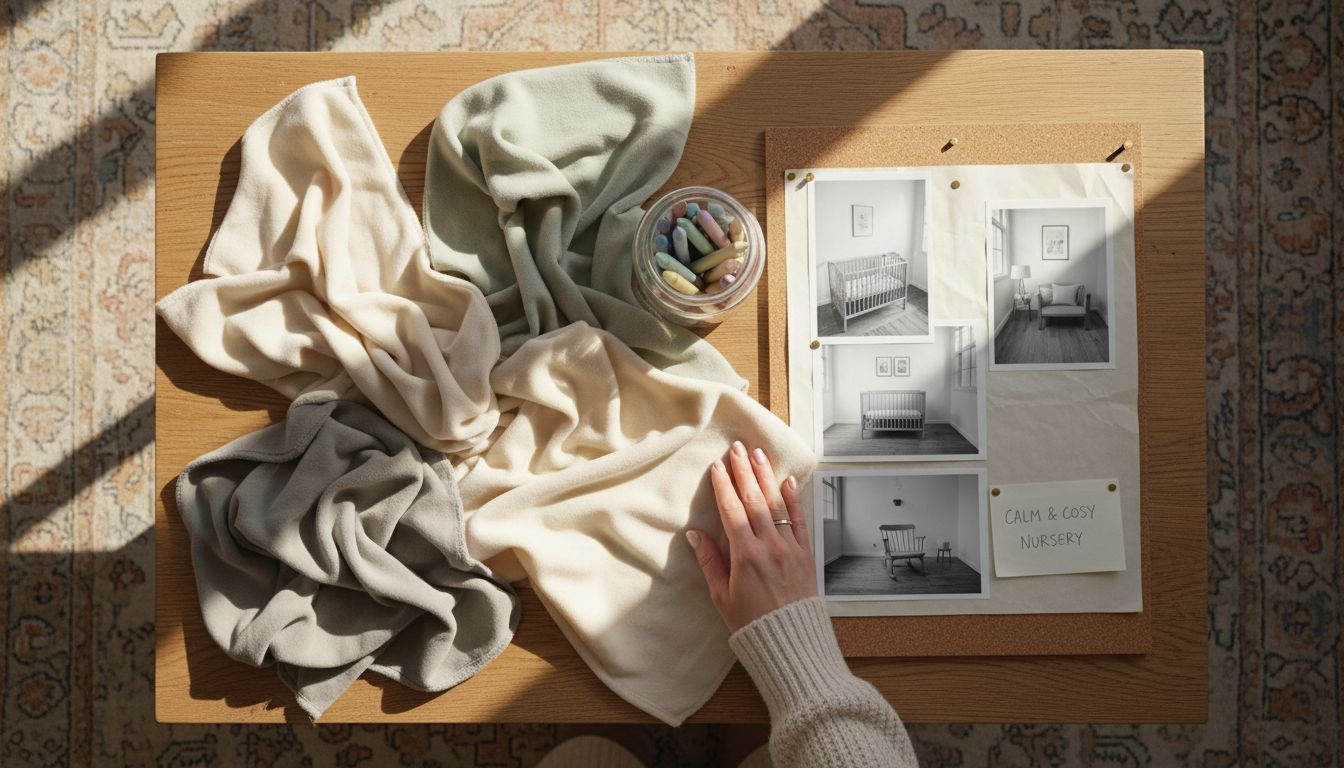
When developing your theme, think about maintaining simplicity and minimalism. Select decor elements that serve both functional and aesthetic purposes. Opt for clean lines, subtle patterns, and a limited colour scheme that allows each piece to breathe. Incorporate natural elements like wooden furniture, botanical prints, or gentle landscape motifs that bring a sense of calm and connection to the outside world.
Expert tip: Create a mood board with your chosen colours and textures to visualise how they will work together before making final design decisions.
Step 3: Select sustainable and safe décor pieces
Choosing décor pieces for your nursery requires careful consideration of safety, sustainability, and quality. Child safety guidelines emphasise the critical importance of selecting non toxic materials and age appropriate furnishings that protect your little one while supporting environmental responsibility.
Prioritise natural materials like solid wood, organic cotton, and sustainably sourced textiles. Look for certifications such as OEKO-TEX Standard 100 for textiles or Forest Stewardship Council (FSC) certification for wooden items, which guarantee minimal chemical treatments and responsible sourcing. Avoid plastics with harmful chemicals like BPA or phthalates, and opt for pieces with rounded edges to prevent potential injury. Consider purchasing multi functional items that grow with your child, reducing waste and providing long term value.
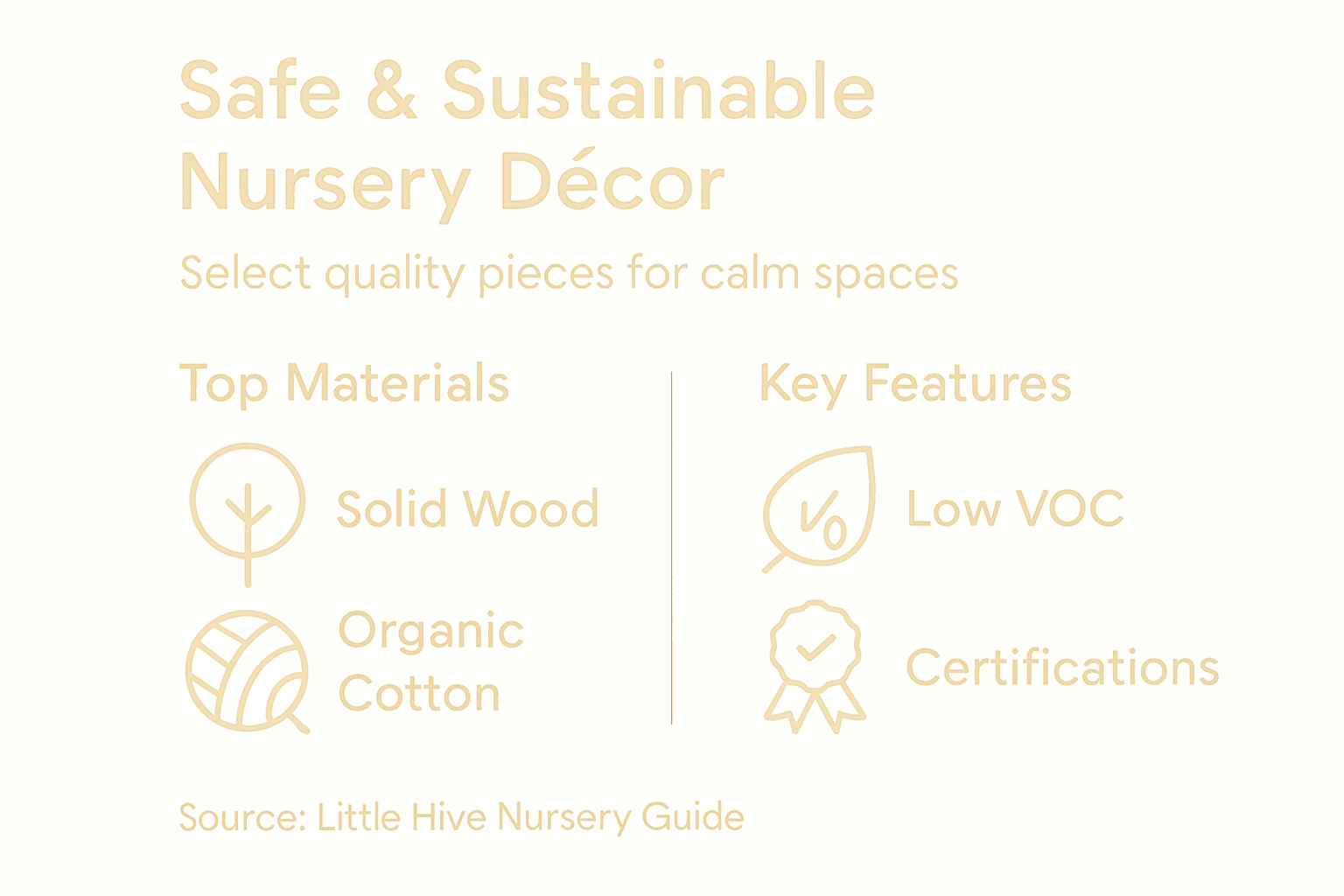
When selecting decorative elements, focus on pieces that are both beautiful and functional. Wooden mobiles, soft textile wall hangings, and minimalist shelving made from natural materials can add visual interest while maintaining a clean aesthetic. Seek out local artisans or brands committed to sustainable production practices, supporting both environmental consciousness and craftsmanship.
Here is a comparison of common nursery décor materials and their impact on sustainability and safety:
| Material Type | Sustainability Benefits | Safety Considerations |
|---|---|---|
| Solid wood | Biodegradable, FSC certified | Sturdy, splinter-resistant |
| Organic cotton | Reduced chemical use, OEKO-TEX | Hypoallergenic, gentle on skin |
| Wool | Naturally flame-resistant | Soft texture, potential allergens |
| Recycled materials | Reduces landfill, lower footprint | Safety depends on processing |
| Plastics (avoided) | Durable, cost-effective | May contain BPA or phthalates |
Expert tip: Regularly inspect nursery décor for wear and tear, replacing items that show signs of damage to maintain a safe environment.
Step 4: Coordinate key accessories and finishing touches
Adding the final touches to your nursery transforms the space from functional to truly special. Nursery accessories guidance highlights the importance of selecting accessories that complement your calming theme while supporting your child’s sensory development and comfort.
Choose soft textural elements like organic cotton cushions, gentle wool blankets, and lightweight muslin throws that add warmth and visual interest. Consider practical storage solutions such as woven baskets, minimalist shelving, and wall mounted organisers that maintain your clean aesthetic while providing essential functionality. Select artwork or wall hangings that feature soft natural motifs like woodland creatures, gentle landscapes, or abstract watercolour designs that harmonise with your chosen colour palette.
Pay attention to lighting as a crucial finishing touch. Opt for soft dimmable lamps, natural fibre lampshades, and strategically placed ambient lighting that creates a soothing atmosphere. Incorporate small personal elements like a handmade mobile, a treasured family photograph, or a delicate ceramic piece that adds character without overwhelming the space.
Expert tip: Layer textures and accessories gradually to avoid cluttering the space and maintain a sense of calm and simplicity.
Step 5: Review your nursery for harmony and quality
The final step in creating your perfect nursery is a comprehensive review to ensure every element works harmoniously together. Nursery environment assessment provides a systematic approach to evaluating the overall quality and developmental appropriateness of your carefully curated space.
Begin by stepping back and viewing the nursery as a complete environment. Check that your colour palette flows seamlessly, with no jarring visual elements disrupting the calm atmosphere. Ensure all accessories and furniture pieces complement each other in style and tone. Verify that functional items like storage solutions and lighting integrate smoothly with your design theme, maintaining both aesthetic appeal and practical utility.
Conduct a detailed sensory and safety audit. Test the room’s lighting at different times of day, listen to the acoustic qualities, and assess the tactile experience of textiles and surfaces. Confirm that safety features are discreetly incorporated without compromising the room’s serene design. Look for potential improvements or small adjustments that could enhance the space’s harmony and functionality, always keeping your child’s comfort and developmental needs at the forefront of your considerations.
Use this summary to check if your nursery review is comprehensive:
| Review Aspect | What to Check | Why It Matters |
|---|---|---|
| Colour palette | Consistent, calming tones | Promotes relaxation |
| Lighting | Adjustable, ambient options | Adapts to different needs |
| Sensory experience | Soft textures, pleasant sounds | Supports child development |
| Safety integration | Hazards minimised, safe materials | Ensures overall well-being |
Expert tip: Take photographs of your completed nursery and review them objectively, as images often reveal design inconsistencies more clearly than direct observation.
Create Your Calm and Stylish Nursery with Little Hive
Transforming your nursery into a serene space that fosters comfort and safety can feel overwhelming. The article highlights key challenges such as selecting a calming décor palette, sourcing sustainable and non toxic materials, and coordinating accessories without overcrowding your little one’s environment. If you are looking to balance timeless style with functionality while prioritising your child’s well-being, you need solutions that reflect craftsmanship, durability, and gentle aesthetics.
At Little Hive, we understand the importance of creating harmonious children’s spaces. Explore our carefully curated collection of nursery décor, wooden toys, and accessories crafted from natural and sustainable materials. Each piece is designed to support a nurturing atmosphere that evolves with your child and promotes calmness and joy.
Begin your journey to a beautifully styled nursery today by visiting Little Hive’s online boutique. Discover heirloom-quality products that make creating a safe, soothing environment easier and more enjoyable. Act now to bring home timeless beauty that grows with your family.
Frequently Asked Questions
How can I assess my nursery space and needs effectively?
Begin by measuring your nursery room accurately and sketching a basic floor plan. Map out areas for sleeping, changing, feeding, and playing, ensuring each zone is accessible and flows naturally.
What colour palette should I choose for a calming nursery décor theme?
Opt for soft neutrals and muted natural tones like warm whites, gentle greys, and soft sage greens. Aim for a harmonious look that promotes tranquillity and comfort throughout the space.
How can I ensure the safety of my nursery décor selections?
Prioritise natural materials like solid wood and organic cotton, which are less likely to contain harmful chemicals. Look for age-appropriate furnishings and regularly inspect items for wear and tear to maintain a safe environment.
What accessories should I include to enhance the nursery’s calming atmosphere?
Select soft textural elements such as organic cotton cushions and wool blankets, along with practical storage solutions like woven baskets. Ensure that artwork and decorative pieces align with your calming theme and colour palette.
How do I review my nursery for overall harmony and quality?
Step back to assess the nursery as a complete environment, checking for a consistent colour palette and functional integration of accessories. Conduct a sensory audit, testing lighting and textures to ensure they support your child’s comfort and development.