

How to Select Nursery Accessories for a Calm, Stylish Space
Every parent faces that moment when transforming a spare room into a nurturing space feels both thrilling and daunting. The nursery should be a peaceful sanctuary where your baby can thrive, supported by thoughtful choices in lighting, colour, and furnishings. This guide will help you combine style, sustainability, and practical design, giving you confidence to create a beautiful haven built on lasting quality and craftsmanship.
Table of Contents
- Step 1: Assess Your Nursery Space and Lighting
- Step 2: Define Style and Colour Preferences
- Step 3: Prioritise Sustainable and Durable Materials
- Step 4: Choose Functional and Safe Accessories
- Step 5: Verify Compatibility and Aesthetic Balance
Quick Summary
| Key Point | Explanation |
|---|---|
| 1. Assess space and lighting needs | Understand your nursery’s dimensions and natural light to create a nurturing environment for your baby. |
| 2. Choose calming colour palettes | Select soft, neutral colours that promote a serene atmosphere supportive of your baby’s sleep and relaxation. |
| 3. Prioritise sustainable materials | Opt for eco-friendly, durable furnishings to ensure safety for your baby and reduce your environmental footprint. |
| 4. Ensure functionality and safety | Choose nursery accessories that are both aesthetically pleasing and meet stringent safety standards to protect your child. |
| 5. Create aesthetic harmony | Evaluate how all nursery items interact, ensuring they complement each other visually while serving practical purposes. |
Step 1: Assess Your Nursery Space and Lighting
Selecting the right nursery accessories starts with a thorough understanding of your available space and lighting conditions. This crucial first step will help you create a nurturing environment that supports your baby’s development and your family’s comfort.
Begin by measuring your nursery carefully and creating a detailed floor plan. Consider the room’s natural light exposure, window placement, and potential locations for key furniture pieces like the cot, changing station, and nursing chair. Optimal lighting configurations are essential for creating a calm yet stimulating atmosphere that supports your baby’s circadian rhythms and overall well-being.
When assessing lighting, aim for a layered approach that includes ambient, task, and accent lighting. Soft, warm light sources with dimmable options will allow you to adjust the room’s brightness throughout the day and night. Position lighting fixtures strategically to avoid harsh glares, ensuring they are safely out of your baby’s reach. Pay attention to natural light sources and consider how window treatments can help regulate the room’s brightness and temperature.
Here is a quick reference comparing common nursery lighting types and their benefits:
| Lighting Type | Primary Function | Best Placement | Benefit to Baby’s Space |
|---|---|---|---|
| Ambient Light | General illumination | Ceiling fixtures | Ensures even, gentle brightness |
| Task Lighting | Focused area lighting | Near changing table | Supports feeding and care tasks |
| Accent Lighting | Decorative highlighting | Corners or shelves | Adds warmth and visual interest |
| Natural Light | Daytime brightness | Near windows | Supports healthy sleep rhythms |
Top Tip: Invest in adjustable lighting solutions that can evolve with your baby’s changing needs, providing flexibility from newborn to toddler stages.
Step 2: Define Style and Colour Preferences
Defining your nursery’s style and colour palette is a deeply personal journey that sets the emotional tone for your baby’s first space. This step transforms a blank room into a thoughtful, harmonious environment that reflects your family’s aesthetic and nurturing vision.
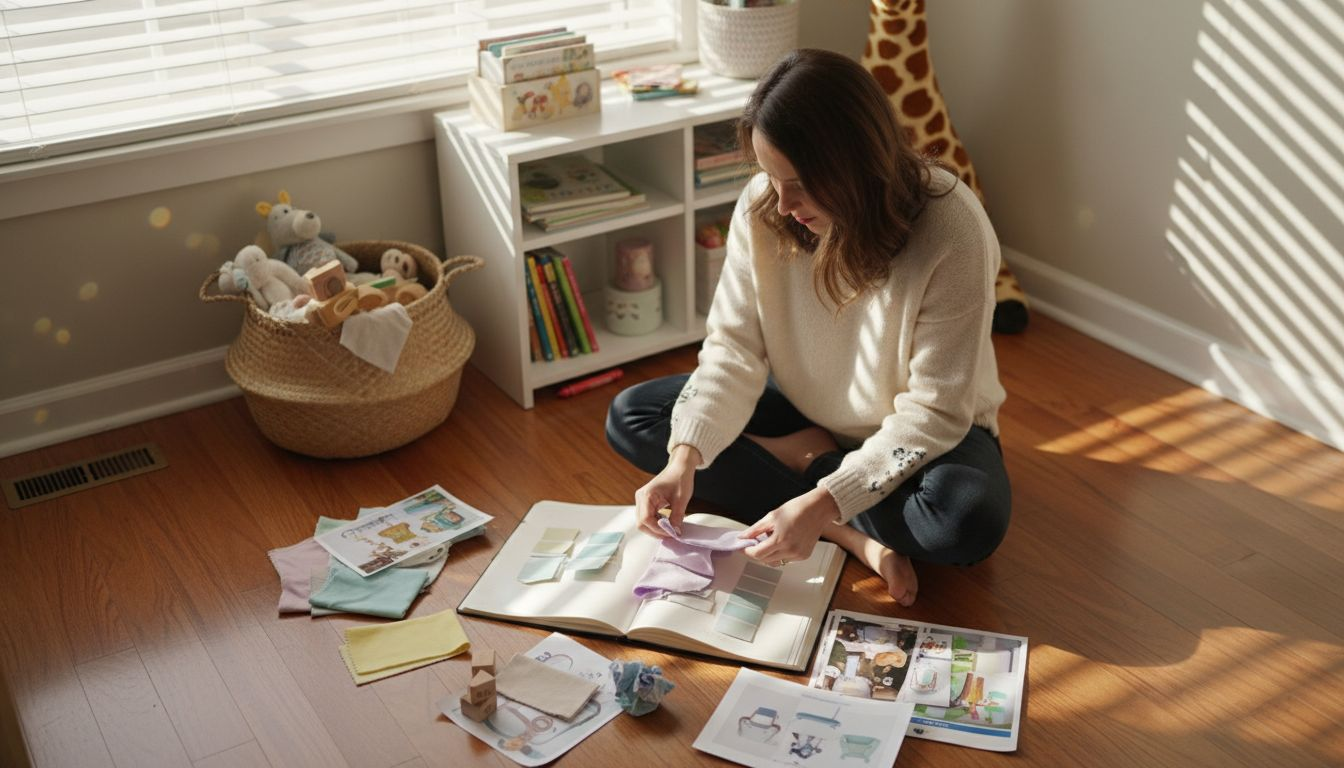
Start by exploring colour psychology in nursery design, understanding how different hues can influence mood and development. Soft neutrals like warm beiges, muted greens, and gentle blues create a calming atmosphere conducive to sleep and relaxation. Consider how the chosen colours will interact with natural light and complement your existing home decor. Some parents prefer a serene palette that promotes tranquillity, while others might select more vibrant tones to stimulate creativity and playfulness.
When selecting your colour scheme, think beyond paint colours to include textiles, furniture, and accessories. Look for a cohesive palette that feels balanced and adaptable as your child grows. Aim for a mix of foundational neutral tones with subtle accent colours that can be easily updated. Consider paint finishes that are durable and washable, such as eggshell or satin, which will withstand the inevitable marks and spills of early childhood.
Top Tip: Create a mood board with fabric swatches, paint samples, and inspiration images to visualise how your chosen colours will work together before making final decisions.
Step 3: Prioritise Sustainable and Durable Materials
Choosing sustainable and durable materials for your nursery is a critical decision that impacts both your child’s immediate environment and the broader ecological footprint of your family’s choices. This step focuses on selecting accessories and furnishings that are not only safe and long lasting but also environmentally responsible.
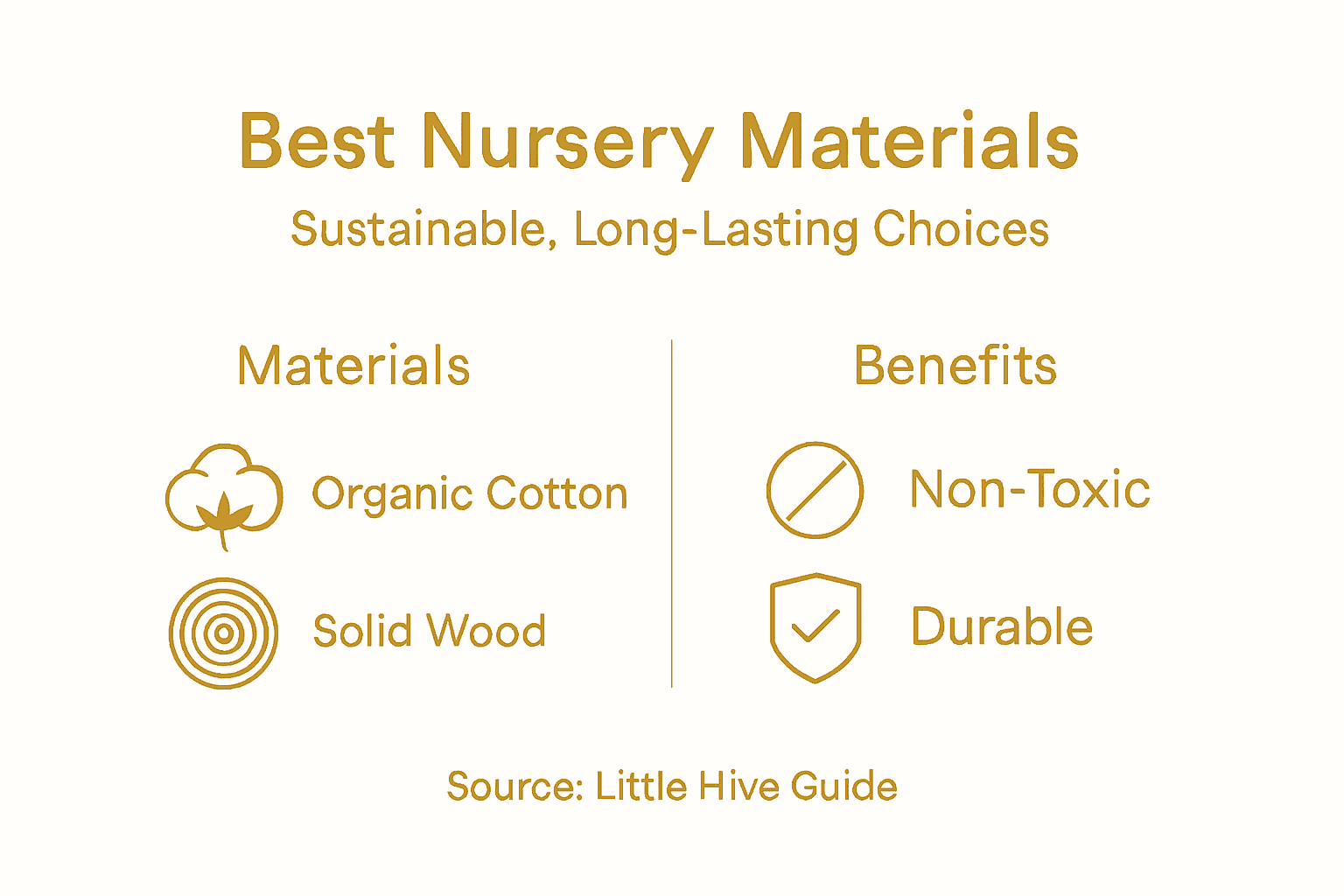
Begin by researching sustainable nursery materials that prioritise natural, non toxic components. Look for furniture crafted from responsibly sourced woods, organic textiles, and products with certifications like OEKO-TEX or GOTS, which guarantee materials are free from harmful chemicals. Seek out convertible designs such as cribs that transform into toddler beds or modular furniture pieces that can adapt as your child grows, reducing waste and providing long term value.
When evaluating materials, consider their entire lifecycle and environmental impact. Prioritise renewable resources and biodegradable options over conventional plastics. Pay attention to the durability of textiles, looking for high quality organic cotton, bamboo, or wool that can withstand repeated washing and maintain its integrity. Consider the practicality of materials that are easy to clean, resistant to stains, and can endure the inevitable wear and tear of childhood.
Below is a summary of eco-friendly nursery materials and their advantages:
| Material Type | Sustainability Benefit | Durability Factor |
|---|---|---|
| Organic Cotton | Reduces chemical exposure | Stays soft after washing |
| Sustainably Sourced Wood | Minimises deforestation | Strong, long-lasting |
| Bamboo | Rapidly renewable resource | Resistant to wear |
| Wool | Biodegradable and natural | Durable and easy to clean |
Top Tip: Invest in multi functional pieces with timeless design that can transition between different stages of childhood, maximising both sustainability and economic value.
Step 4: Choose Functional and Safe Accessories
Selecting nursery accessories requires a careful balance between aesthetic appeal and practical safety considerations. This critical step ensures your baby’s environment is both beautiful and secure, protecting their well-being while supporting daily care routines.
Begin by prioritising nursery safety standards that protect your child from potential hazards. Focus on certified products meeting JPMA and CPSC guidelines, avoiding accessories with small detachable parts or toxic finishes. Carefully examine each item’s design to ensure it supports safe interaction and minimises risks. Secure heavy furniture to walls to prevent tipping, keep electrical cords out of reach, and select accessories with rounded edges and non toxic materials.
Functionality should be at the forefront of your accessory selection. Create dedicated zones within the nursery for specific activities such as feeding, changing, and sleeping. Choose organisational solutions that streamline caregiving tasks minimising stress and maximising efficiency. Look for multi purpose accessories that can adapt as your child grows such as adjustable changing stations or storage units with removable compartments. Consider the ergonomics of each accessory from both the baby’s and caregiver’s perspective ensuring comfort and practical usability.
Top Tip: Always test accessories physically in the nursery space to confirm they genuinely meet both safety and functional requirements before making final purchasing decisions.
Step 5: Verify Compatibility and Aesthetic Balance
Creating a harmonious nursery requires careful consideration of how each accessory interacts with the overall design and functional requirements. This step is about ensuring that every item not only looks beautiful but also works seamlessly within the space you have created.
Start by evaluating your minimalist nursery design principles. Aim for a consistent colour palette that creates visual tranquillity while maintaining practical functionality. Choose accessories with complementary textures and finishes that speak to one another without creating visual chaos. Consider how each piece contributes to the room’s overall atmosphere ensuring that accessories serve both aesthetic and practical purposes.
Approach compatibility from multiple perspectives. Examine how different accessories interact spatially within the nursery ensuring smooth traffic flow and avoiding cluttered areas. Check that colour tones and material finishes create a cohesive visual language. Pay attention to scale and proportion making certain larger pieces do not overwhelm smaller accessories and that each element feels intentionally placed. Test the visual relationships between items by temporarily arranging them in the space allowing you to see how they communicate and support one another.
Top Tip: Take a photograph of your proposed accessory arrangement and view it in black and white to objectively assess balance and visual harmony without being distracted by colour.
Create a Calm and Stylish Nursery with Little Hive
Selecting the perfect nursery accessories to build a calm and stylish space can feel overwhelming when balancing safety, durability, sustainability and aesthetic harmony. This guide highlights key challenges such as choosing the right lighting, defining soothing colour tones, prioritising sustainable materials and ensuring functional yet safe accessories that grow with your child. At Little Hive, we understand these goals and offer a thoughtfully curated collection of timeless nursery décor, handcrafted wooden toys, and gentle accessories designed to bring peace and beauty into your baby’s environment.
Discover elegant pieces that blend craftsmanship with lasting quality at Little Hive. Experience the ease of creating a nurturing nursery where every item reflects thoughtfully sourced materials and enduring design principles. Begin your journey towards an heirloom-quality nursery that truly supports your family’s vision by exploring our unique nursery décor and children’s lifestyle products. Take comfort knowing your choices contribute to a calm space that will grow alongside your little one. Visit us today and bring your nursery dreams to life.
Frequently Asked Questions
How do I assess the lighting in my nursery space?
Start by measuring your nursery and noting the window placements. Use this information to identify how natural light enters the room and consider where to place multiple lighting types like ambient, task, and accent to create a balanced environment.
What colour palette should I choose for my nursery?
Select soft, calming colours such as warm beiges, muted greens, or gentle blues that promote relaxation. Create a mood board with fabric swatches and paint samples to visualise how these colours will work together in the space.
How can I ensure I choose sustainable materials for nursery accessories?
Prioritise natural, non-toxic materials such as organic cotton and sustainably sourced wood. Research materials with reputable certifications, and focus on products designed to last through multiple stages of your child’s growth.
What safety considerations should I keep in mind when selecting nursery accessories?
Always choose accessories that meet safety standards and avoid items with small detachable parts or toxic finishes. Ensure heavier pieces are secured and that all accessories have rounded edges and are made from non-toxic materials.
How can I achieve a cohesive look with my nursery accessories?
Evaluate each accessory’s colour, texture, and size to ensure they complement each other visually. Consider temporarily arranging items in the nursery to assess their compatibility before making final selections.
Recommended
- Role of Accessories in Nursery – Creating Calm, Sustainable Spaces – The Little Hive
- How to Select Nursery Décor for a Stylish Calm Space – The Little Hive
- Complete Baby Accessories Setup Process for Stylish Nurseries – The Little Hive
- How to Set Up Nursery for a Calm and Stylish Space – The Little Hive