

What Is Sustainable Baby Clothing and Why It Matters
Choosing baby clothing today goes well beyond picking cute outfits in a London shop. For British parents, balancing style, comfort, and environmental impact is a real challenge when every label claims eco credentials. Sustainable babywear means investing in non-toxic, eco-friendly fabrics that protect your newborn’s sensitive skin and help create a soothing nursery space. This guide explains what genuine sustainability in baby clothing involves and how you can make thoughtful choices that truly care for both your child and the environment.
Table of Contents
- Defining Sustainable Baby Clothing Today
- Common Types And Key Materials Explained
- How Sustainable Clothing Is Produced Ethically
- Certifications And Standards For Eco Babywear
- Costs, Pitfalls, And Smarter Alternatives
Key Takeaways
| Point | Details |
|---|---|
| Understanding Sustainability | Sustainable baby clothing involves more than organic materials; it includes ethical production practices and transparency in the supply chain. |
| Material Significance | Key sustainable fabrics like organic cotton, bamboo, and hemp provide environmental benefits and ensure comfort for sensitive baby skin. |
| Certifications Matter | Look for certifications such as GOTS and OEKO-TEX to verify the sustainability and safety of baby clothing. |
| Invest in Quality | Prioritise purchasing fewer, higher-quality pieces rather than succumbing to fast fashion, focusing on durability and longevity. |
Defining Sustainable Baby Clothing Today
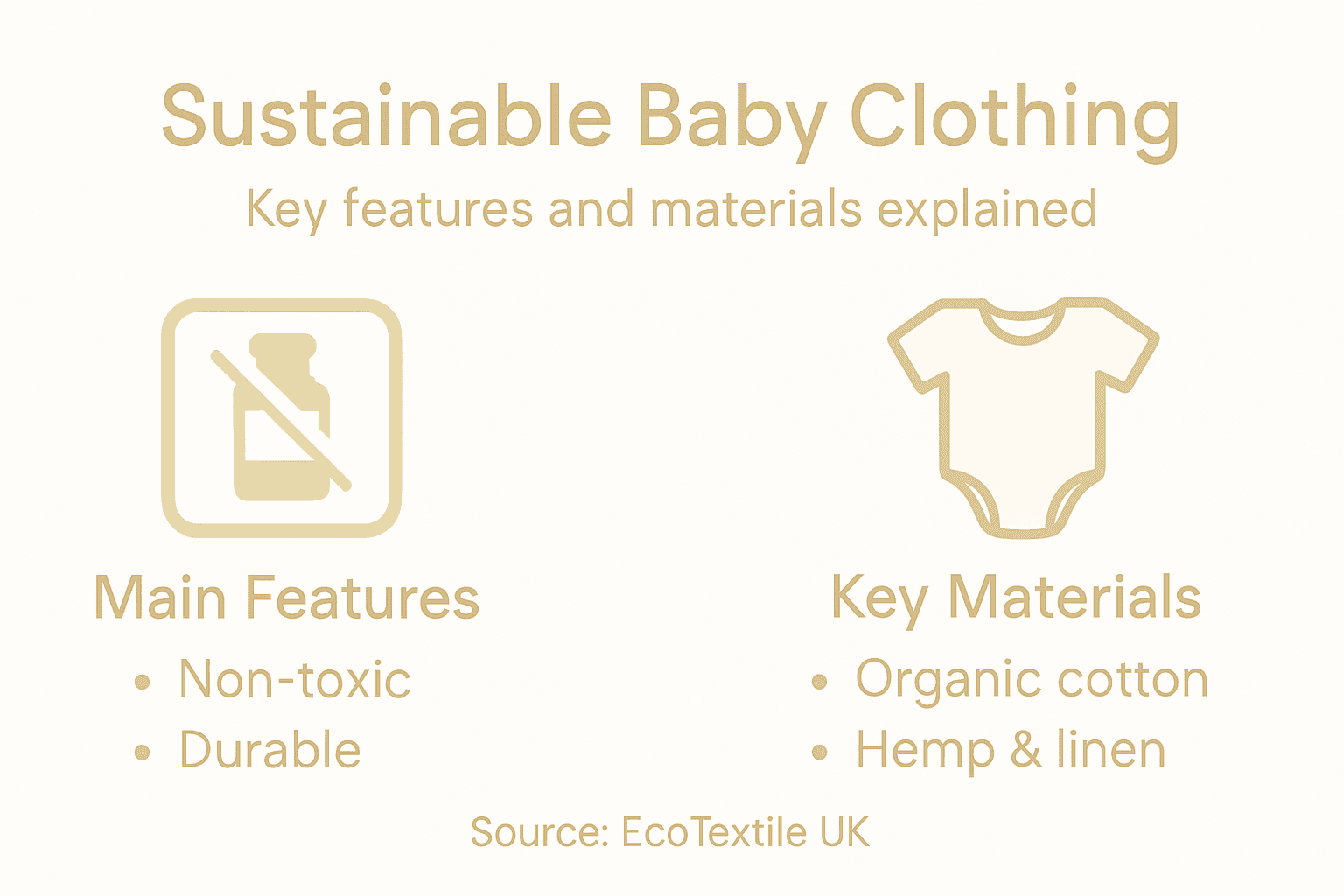
Sustainable baby clothing means far more than simply choosing garments made from organic cotton. It represents a commitment to reducing environmental harm whilst safeguarding your baby’s delicate skin from toxic chemicals and synthetic treatments. The reality is that genuine sustainability encompasses material sourcing, manufacturing processes, supply chain transparency, and the durability of each piece.
When you’re selecting sustainable baby wear, you’re looking at products designed with interconnected environmental and social responsibility in mind. This means brands aren’t just ticking boxes with eco-friendly materials; they’re building entire business models around reducing their ecological footprint. A truly sustainable baby clothing brand considers how fabrics are grown, how garments are produced, who makes them, and whether those pieces will outlast a single season.
Babies have particularly sensitive skin, which is why non-toxic materials and eco-friendly manufacturing processes become absolutely critical. Your newborn’s skin isn’t a barrier yet; it’s remarkably permeable. Any chemical residue from conventional dyes, finishes, or pesticide-laden cotton can be absorbed directly. Sustainable clothing eliminates these risks entirely by prioritising natural, non-toxic production methods from fibre to finished garment.
What makes sustainable baby clothing particularly important in the UK context is durability. Rather than fast-fashion pieces that shrink after three washes, genuinely sustainable brands create clothing built to pass down to younger siblings or cousins. A well-made organic cotton romper or wool jumper becomes an investment rather than disposable waste.
The key distinction today is that sustainable baby clothing isn’t a single standard. Different brands emphasise different elements: some focus purely on organic materials, whilst others prioritise fair labour practices or carbon-neutral shipping. The best approach is understanding what matters most to your family’s values, then seeking transparency from brands about how they achieve their sustainability claims.
Pro tip: Check whether a brand offers washing and care instructions designed to extend garment life, as this directly reduces the environmental impact of each piece over time.
Common Types and Key Materials Explained
When you’re shopping for sustainable baby clothing, understanding the materials makes all the difference. The fabrics you choose directly affect your baby’s comfort, health, and the environmental impact of each garment. Let’s break down the most common sustainable options you’ll encounter.
Organic cotton remains the gold standard for sustainable baby wear. Unlike conventional cotton grown with heavy pesticide use, organic cotton is cultivated without synthetic chemicals. It’s breathable, soft against delicate skin, and becomes softer with every wash. Bamboo fabric offers similar benefits with an even lighter environmental footprint, as bamboo grows rapidly without requiring pesticides or intensive irrigation.
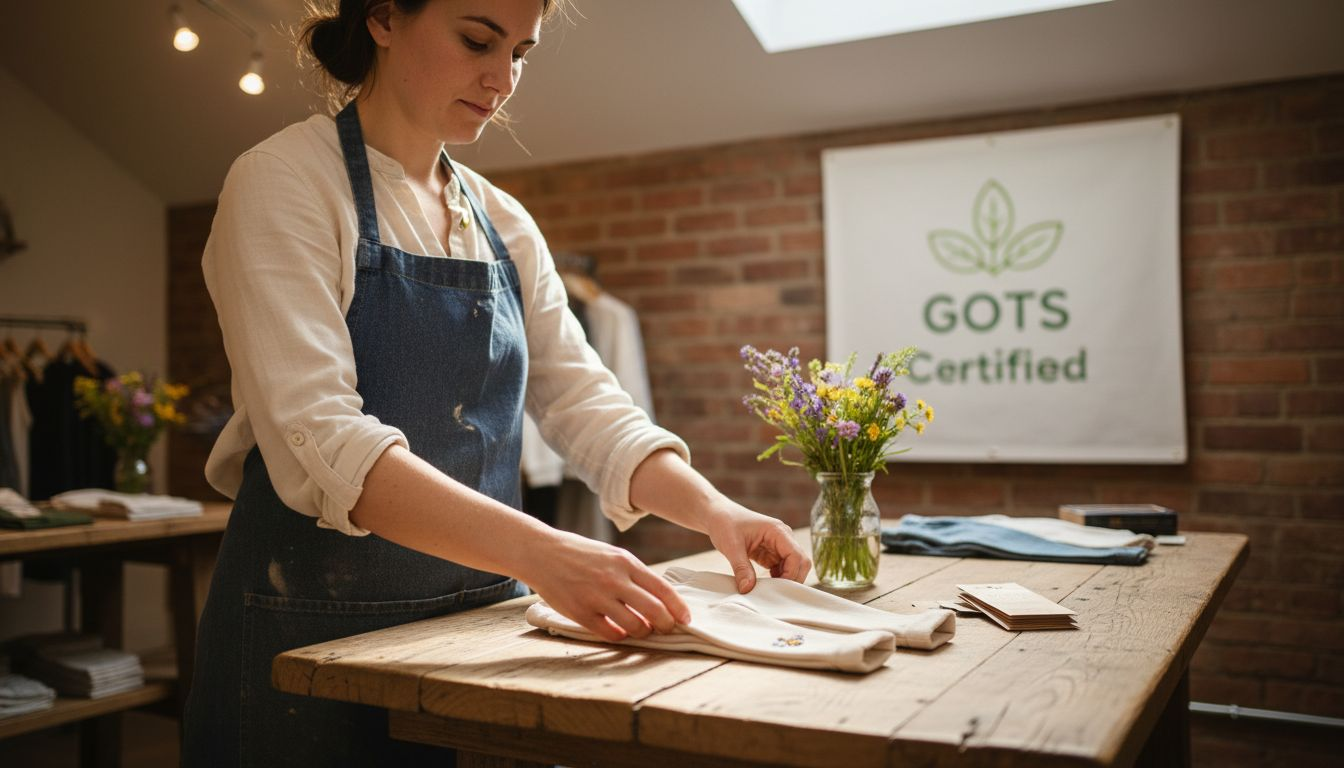
Hemp and linen are increasingly popular for sustainable babies’ clothing. Both are durable natural fibres that improve with age and washing. Hemp requires minimal water and no pesticides to grow, making it exceptionally eco-friendly. Linen shares similar advantages and works beautifully for summer pieces because of its breathability.
Recycled and bio-based materials represent the emerging frontier. Recycled polyester and renewable fibres are now being incorporated into high-quality baby garments, reducing landfill waste whilst maintaining durability. These materials have come a long way from their early iterations and now meet stringent safety standards for infant wear.
What ties all these materials together is the manufacturing process. Eco-friendly, hypoallergenic fabrics require non-toxic dyes and chemical finishes. Many sustainable brands now use natural dyes derived from plants or implement closed-loop dyeing systems that eliminate harmful runoff. This protects both your baby and the waterways where production occurs.
The durability factor cannot be overlooked. A well-made organic cotton baby grow that lasts through multiple children is infinitely more sustainable than cheap synthetic pieces destined for the charity shop after a season. Quality materials hold their shape, colour, and integrity through countless washes.
Here is a summary of the most common sustainable materials for baby clothing and their unique benefits:
| Material | Environmental Impact | Comfort Features | Typical Use Cases |
|---|---|---|---|
| Organic Cotton | Low pesticides, less water | Soft, breathable, gentle | Everyday rompers, baby grows |
| Bamboo | Minimal water, fast growth | Silky texture, moisture wicking | Sleepwear, summer outfits |
| Hemp | Needs little water, no chemicals | Strong, improves with washing | Durable trousers, outerwear |
| Linen | Sustainable crop, biodegradable | Cool and airy in hot weather | Summer dresses, shirts |
| Recycled Polyester | Reduces landfill, reuses waste | Durable and colourfast | Jackets, performance wear |
Pro tip: Check product labels for certifications like GOTS (Global Organic Textile Standard) or OEKO-TEX, which verify both material authenticity and chemical safety standards.
How Sustainable Clothing Is Produced Ethically
Ethical production goes far beyond choosing sustainable materials. It means caring about the people making your baby’s clothes and the environmental impact of every step in the manufacturing process. When a brand claims to produce sustainably, their production methods should reflect genuine commitment to worker welfare and planet protection.
Fair labour practices form the foundation of ethical production. This means workers receive fair wages, work reasonable hours, and operate in safe conditions with proper ventilation and equipment. Baby clothing manufacturers following ethical standards ensure no child labour exists anywhere in their supply chain. These commitments protect the people making your newborn’s garments just as much as sustainable materials protect your baby’s skin.
Non-toxic chemical use and waste reduction are critical throughout production. Ethical manufacturers implement closed-loop systems where water used in dyeing and washing is treated before release. They avoid harmful chemicals like azo dyes or heavy metals that poison waterways and harm workers’ health. This approach protects communities living near factories as well as global water systems.
Transparent supply chains allow you to trace exactly where your baby’s clothing comes from. Ethical brands openly share information about their factories, suppliers, and production partners. They undergo third-party audits to verify claims. Transparency builds trust because you can see the actual conditions where manufacturing happens.
Responsible sourcing and minimising waste and pollution throughout the supply chain validates sustainable manufacturing claims. This includes how raw materials are sourced, how offcuts are managed, and how finished goods are transported. Ethical producers seek to eliminate waste entirely through innovative remanufacturing and upcycling processes.
The reality is simple: truly sustainable baby clothing cannot exist without ethical production. When every step honours both people and planet, you’re investing in clothing that reflects your family’s values.
Pro tip: Look for third-party certifications like Fair Trade or SA8000 on baby clothing labels, as these verify independent auditing of ethical production standards.
Certifications and Standards for Eco Babywear
With so many brands claiming sustainability, certifications become your most reliable guide. They represent independent verification that clothing actually meets strict environmental and safety standards rather than relying solely on marketing promises. Understanding which certifications matter helps you make confident choices for your newborn.
GOTS (Global Organic Textile Standard) is the gold standard for organic baby clothing. This certification verifies that fabrics contain at least 95 percent organic fibres and ensures non-toxic dyes and chemical finishes throughout production. GOTS also audits social compliance, meaning workers’ rights are protected. When you see this label, you know the entire supply chain has been independently verified.
OEKO-TEX focuses specifically on chemical safety. This certification tests finished garments for harmful substances that could irritate your baby’s delicate skin. It covers everything from pesticide residues to heavy metals. Many parents choose OEKO-TEX certified pieces precisely because skin contact is the primary concern with newborn clothing.
Bluesign tackles environmental responsibility in manufacturing. This system manages chemical use during production to prevent water pollution and worker exposure to hazardous substances. Bluesign certified fabrics are manufactured responsibly from start to finish. Emerging sustainability standards including Bluesign ensure that environmental responsibility remains at the core of production.
Fair Trade certification verifies that workers throughout the supply chain receive fair wages and work in safe conditions. This certification matters enormously when buying baby clothing because it guarantees no exploitation occurred during manufacturing. Certified standards like Fair Trade provide benchmarks that reinforce consumer trust in sustainable babywear globally.
Other valuable certifications include MADE SAFE (which screens for toxic chemicals), Cradle to Cradle (which emphasises circular design), and organic certifications specific to individual countries. When shopping, look for multiple certifications rather than relying on a single label. Brands displaying several verified certifications demonstrate genuine commitment rather than superficial greenwashing.
Below is a comparison of the major sustainability certifications commonly found on baby clothing labels:
| Certification | Focus Area | Key Verification | Typical Assurance for Parents |
|---|---|---|---|
| GOTS | Organic textiles, fair labour | Supply chain audits, non-toxic dyes | High organic purity, ethical sourcing |
| OEKO-TEX | Chemical safety | Finished product testing | Free from irritants and toxins |
| Bluesign | Responsible manufacturing | Chemical management, water pollution | Eco-friendly processes, safe workers |
| Fair Trade | Social responsibility | Worker welfare, fair wages | No exploitation, strong ethics |
Pro tip: Take a photo of certification labels when shopping online or in store, then verify them on the official certification website to ensure they are current and legitimate.
Costs, Pitfalls, and Smarter Alternatives
Sustainable baby clothing costs considerably more than conventional options. A single organic cotton baby dress might cost two to three times the price of its conventional equivalent. This price barrier is real and significant for families budgeting carefully for nursery essentials. However, understanding where costs come from helps reveal smarter ways to build a sustainable wardrobe.
The price premium reflects genuine production standards. Organic farming, fair wages, ethical manufacturing, and certification processes all cost money. Sustainable brands cannot cut corners on these aspects without abandoning their sustainability claims entirely. When you pay more, you’re actually paying for the environmental and social responsibility that cheaper alternatives skip.
One major pitfall is assuming you must replace your entire wardrobe with certified sustainable pieces. This perfectionist approach overwhelms budgets and creates stress rather than calm. Instead, thoughtful consumption and slow fashion principles encourage selecting fewer, higher-quality pieces designed for longevity. A single well-made organic cotton romper worn by multiple children delivers more sustainability than ten disposable fast-fashion items.
Smarter alternatives make sustainable babywear far more accessible. Secondhand and preloved clothing from reputable sellers costs significantly less whilst still offering quality pieces. Your newborn genuinely does not care whether their outfit is new or gently worn. Clothing rental services for baby wear exist specifically for items your child outgrows quickly, eliminating the need to purchase.
Upcycled and secondhand baby clothes dramatically reduce environmental impact whilst keeping costs manageable. Passing hand-me-downs through family and friends creates the ultimate sustainable cycle. Buy a few core investment pieces in certified sustainable brands, then supplement with secondhand finds and borrowing arrangements.
The key pitfall to avoid is greenwashing. Brands making vague sustainability claims without certifications or transparency are rarely delivering genuine sustainability. Cheap items labelled “eco-friendly” without backing evidence are marketing tactics rather than actual progress.
Pro tip: Build your sustainable baby wardrobe gradually by investing in one quality certified piece monthly, then filling gaps with secondhand finds from local charity shops or online platforms.
Discover Truly Sustainable Baby Clothing with Little Hive
Choosing sustainable baby clothing is about more than just organic fabrics — it is a commitment to protecting your little one’s delicate skin and the planet’s future. The article highlights key concerns such as avoiding toxic chemicals, demanding ethical production, and seeking durable pieces that can be treasured for years. At Little Hive, we understand these challenges and have carefully curated a collection that marries timeless style with sustainable values. Our selection features heirloom-quality baby clothing made with thoughtfully sourced materials that nurture both your baby and the environment.
Explore our thoughtfully curated collection today and find quality babywear designed to last beyond the nursery stage. With each purchase, you invest in garments that reflect your family’s values around ethical sourcing, durability, and chemical safety. Visit Little Hive now to build a calm and sustainable wardrobe that grows with your child. Don’t let fast fashion’s disposable approach define your baby’s start — choose carefully and shop confidently.
Frequently Asked Questions
What materials are commonly used in sustainable baby clothing?
Sustainable baby clothing typically uses materials like organic cotton, bamboo, hemp, and linen. These fabrics are grown without harmful chemicals and are soft and breathable for a baby’s delicate skin.
Why is durability important in sustainable baby clothing?
Durability ensures that baby clothing lasts beyond a single season, meaning it can be passed down to younger siblings or friends. This reduces waste and promotes a more sustainable approach to children’s fashion.
How can I ensure the baby clothing I buy is truly sustainable?
Look for certifications like GOTS (Global Organic Textile Standard) and OEKO-TEX, which indicate that materials are organic and free from harmful chemicals. Researching brands and their production practices can also provide insight into their sustainability claims.
What are the benefits of using secondhand baby clothing?
Secondhand baby clothing is not only cost-effective but also significantly reduces environmental impact by extending the life of garments. It supports a circular economy and allows you to dress your baby in quality pieces without the new-item price tag.