

Baby Clothing Care Guide: Keep Babywear Soft and Lasting
Over 60 percent of British families report frequent frustration with faded or damaged baby clothes after just a few washes. For design-minded parents, every carefully chosen outfit is an investment in style and sustainability, not just comfort. Protecting that vibrant look and soft touch requires more than a quick laundry cycle. Discover practical strategies tailored for British households, ensuring your child’s wardrobe stays beautiful, lasts longer, and reflects your care for quality.
Table of Contents
- Step 1: Sort Baby Clothes For Best Results
- Step 2: Pre-treat Stains With Gentle Methods
- Step 3: Wash Clothes Using Mild Detergents
- Step 4: Dry And Store Babywear Thoughtfully
- Step 5: Check For Cleanliness And Lasting Freshness
Quick Summary
| Key Point | Explanation |
|---|---|
| 1. Sort by Colour and Fabric | Separate baby clothes into categories to prevent colour bleeding and protect delicate materials during washing. |
| 2. Pre-treat Stains Gently | Address stains immediately using mild methods to avoid damaging sensitive fabrics and ensure effective removal. |
| 3. Use Mild, Hypoallergenic Detergent | Choose gentle detergents without harsh chemicals to maintain the softness and quality of baby clothing. |
| 4. Dry and Store with Care | Opt for low heat drying and breathable storage to preserve the condition and longevity of garments. |
| 5. Inspect Post-Wash for Cleanliness | Thoroughly check for stains and odours after washing to ensure the quality and comfort of baby clothes. |
Step 1: Sort Baby Clothes for Best Results
Sorting baby clothes might seem straightforward, but doing it correctly can dramatically improve washing results and clothing longevity. By implementing strategic sorting techniques, you will protect delicate fabrics, prevent colour bleeding, and maintain the soft quality of your little one’s wardrobe.
Start by separating garments into precise categories based on colour and fabric type. Effective laundry sorting requires white items to be washed separately from coloured clothing. Group pastels and medium-toned garments together, keeping dark-coloured items in their own load. Pay special attention to fabric textures delicate knitted items need gentler treatment compared to robust cotton pieces. Separate lint-shedding fabrics like fleecy sweatshirts from lint-attracting materials such as fine corduroy to prevent unwanted fabric transfer.
When sorting, also consider soil levels. Heavily soiled items such as bibs or clothing with food stains should be washed separately from lightly worn garments. This prevents dirt and stain particles from redepositing onto cleaner clothes during the wash cycle. Create distinct piles for different washing requirements to streamline your laundry process and protect your baby’s delicate clothing.
Top tip: Create a dedicated sorting basket with multiple compartments to make separating baby clothes quick and effortless, saving time and preventing laundry mix ups.
Here’s a quick reference to sorting and treating common baby clothing fabrics:
| Fabric Type | Sorting Advice | Washing Tip | Stain Removal Suggestion |
|---|---|---|---|
| Cotton | Separate by colour | Use gentle cycle, mild detergent | Enzyme cleaner for food stains |
| Knitwear | Sort separately as delicate | Hand wash or delicate setting | Dab with mild soap and soft cloth |
| Fleece | Keep away from lint-attractors | Gentle cycle, avoid high heat | Rinse in cold water, avoid scrubbing |
| Corduroy | Avoid lint-shedding fabrics | Wash inside out on low temperature | Mild stain remover, test first |
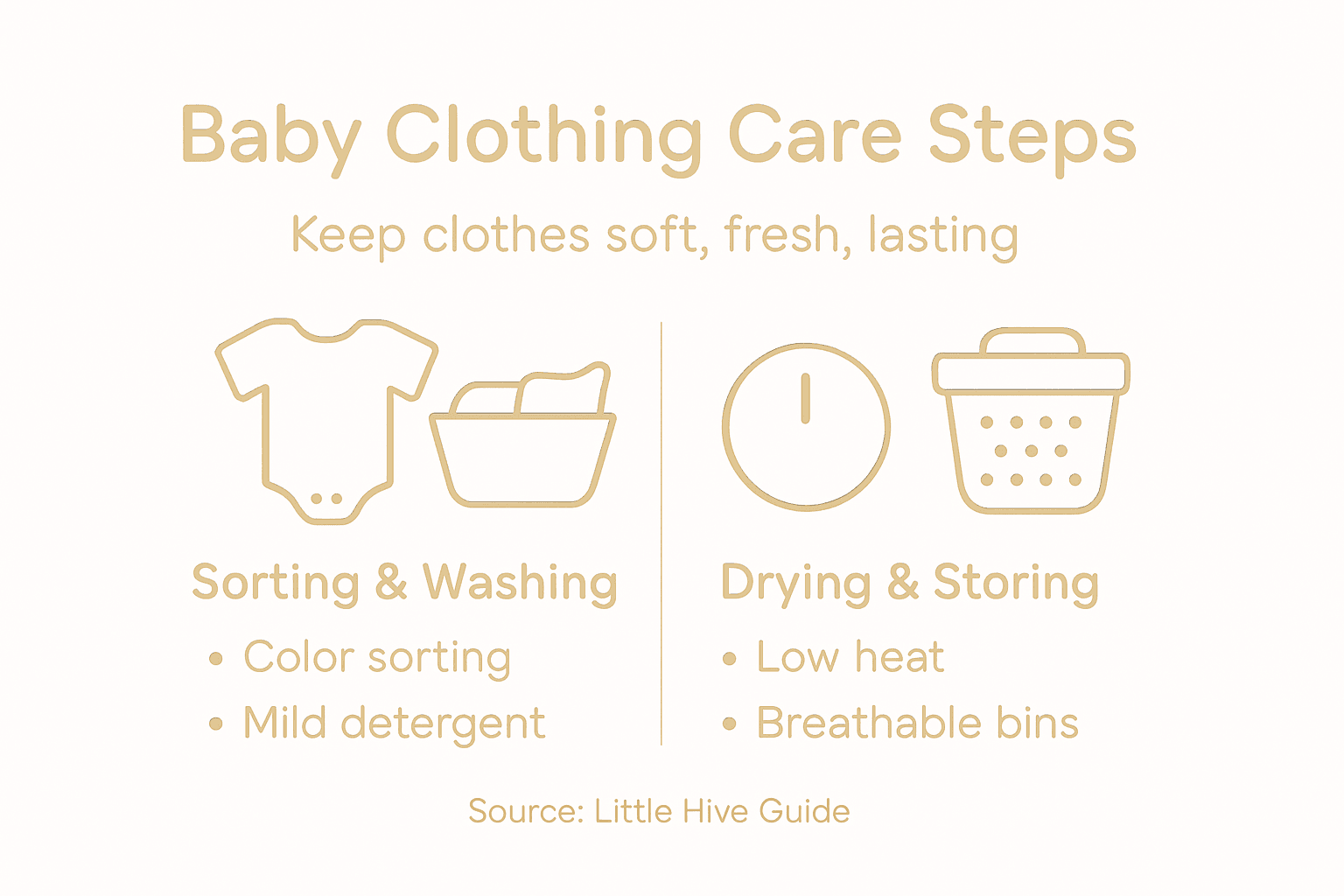
Step 2: Pre-treat Stains with Gentle Methods
Stain removal on baby clothing requires a delicate touch to protect sensitive fabrics and maintain their pristine condition. Your goal is to eliminate stains effectively while preserving the integrity and softness of your little one’s garments.
Begin by addressing stains immediately with gentle techniques. Remove any solid materials by carefully wiping them away before washing. For liquid or more stubborn stains, use a mild stain remover specifically designed for delicate baby fabrics. Cold water rinses and soft cloths work best for lifting marks without aggressive scrubbing that could damage clothing fibres. Avoid harsh chemicals like bleach that might compromise fabric quality or irritate your baby’s sensitive skin.
When pre-treating, work from the outside of the stain towards the centre to prevent spreading. Different stain types require unique approaches milk and food stains might need enzyme-based treatments, while mud or grass marks could benefit from gentle soap solutions. Always test your stain removal method on a small inconspicuous area first to ensure it does not discolour or damage the fabric.
Top tip: Keep a dedicated baby stain removal kit with mild soap, soft cloths, and gentle stain removers in your laundry area for quick and effective treatment.
Step 3: Wash Clothes Using Mild Detergents
Choosing the right detergent for baby clothing is crucial to maintaining fabric quality and protecting your little one’s delicate skin. The washing process requires careful consideration to ensure both cleanliness and comfort.
Selecting gentle baby detergents means prioritising hypoallergenic products specifically formulated for infant clothing. Look for detergents free from harsh chemicals, dyes, and fragrances that could potentially irritate sensitive skin. Use a small amount of the mild detergent just enough to clean effectively without leaving residue. Cold or lukewarm water works best for most baby garments, helping preserve fabric integrity and prevent shrinkage.
When loading the washing machine, avoid overcrowding to ensure thorough cleaning and proper rinsing. Select the gentlest cycle available, typically the delicate or hand wash setting. For particularly delicate items like knitted garments or special occasion wear, consider hand washing to provide extra care. Always check garment labels for specific washing instructions, as some fabrics may require unique treatment.
Top tip: Consider purchasing two separate detergents one for baby clothes and another for general laundry to prevent accidental mix ups and ensure consistent gentle care.
To help you choose suitable detergents for baby clothing, below is a quick comparison:
| Detergent Type | Skin Sensitivity Impact | Key Ingredients To Avoid | Recommended For Babywear |
|---|---|---|---|
| Standard Detergent | May irritate sensitive skin | Bleach, fragrances, brighteners | Not recommended |
| Hypoallergenic | Gentle, minimises reactions | Harsh chemicals and dyes | Highly recommended |
| Eco/Bio Detergent | Usually mild, fewer chemicals | Synthetic scents, SLS/SLES | Suitable for most baby garments |
Step 4: Dry and Store Babywear Thoughtfully
Drying and storing baby clothes requires careful attention to preserve their softness, quality, and longevity. Your approach to these final steps can significantly impact the lifespan and appearance of your little one’s wardrobe.
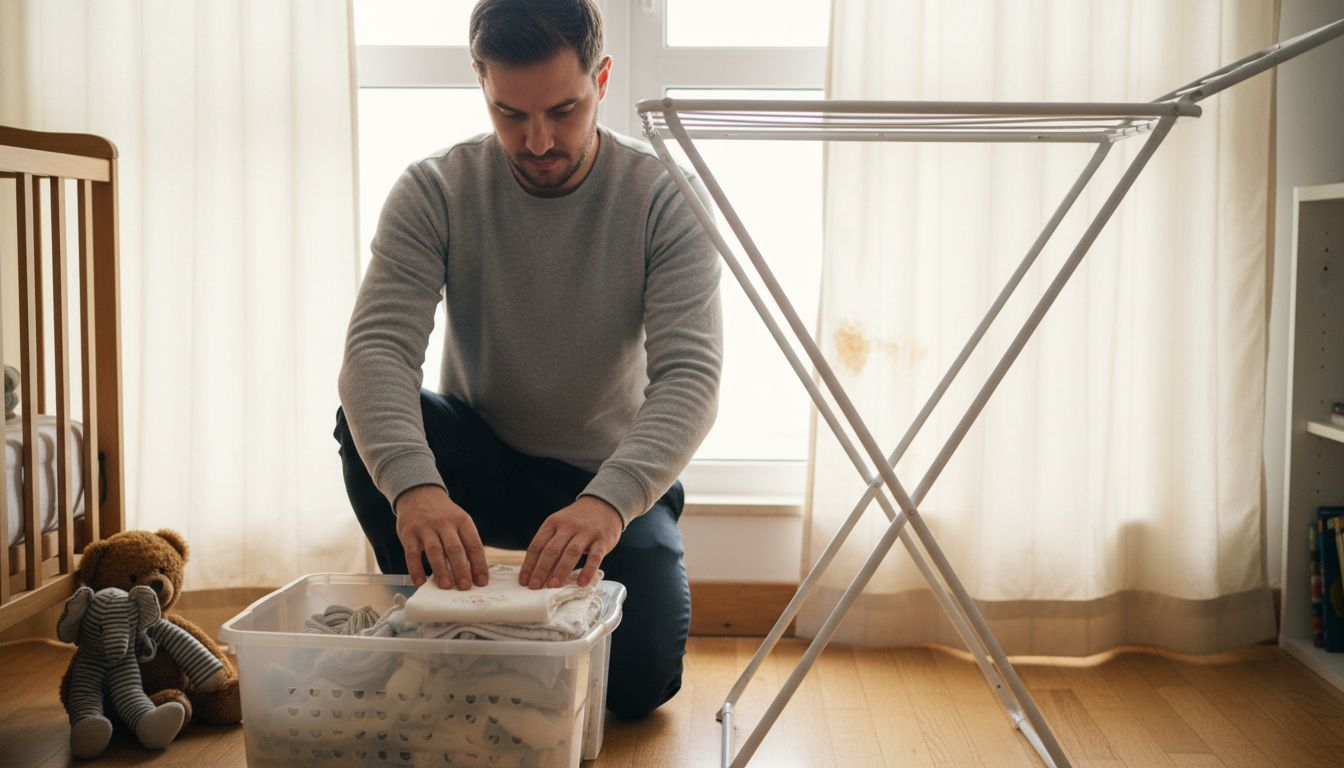
Gentle drying techniques are crucial for maintaining fabric integrity. Choose a warm, low heat setting on your tumble dryer or opt for air drying whenever possible. When using a machine, remove garments promptly to prevent excessive wrinkling and stiffness. For delicate items, lay them flat on a clean towel to dry naturally, away from direct sunlight which can cause fading and fabric degradation.
Storage plays an equally important role in clothing preservation. Select breathable storage containers or drawers that allow air circulation and prevent moisture buildup. Fold garments carefully to minimise creasing, and avoid cramming too many items into a single space. Separate seasonal clothing in clearly labelled containers, keeping each size and type of garment organised. This not only protects the clothes but also makes future access and rotation much easier.
Top tip: Invest in some acid free tissue paper to place between layers of stored clothing, which helps prevent colour transfer and maintains the pristine condition of delicate baby garments.
Step 5: Check for Cleanliness and Lasting Freshness
Ensuring your baby’s clothing remains pristine requires more than just a quick wash. Your final inspection can make a significant difference in maintaining the quality and comfort of each garment.
Thorough cleaning practices involve a meticulous post-wash examination. Begin by holding each garment up to good lighting and inspect carefully for any remaining stains or discoloration. Run your hands over the fabric to check for soft texture and detect any residual detergent or rough patches. Pay special attention to areas prone to stubborn marks like collars, cuffs, and underarms. Use cold water rinses and repeat washing if necessary to ensure complete cleanliness.
Freshness goes beyond visual inspection. Smell the clothing after washing to confirm there are no lingering odours or musty scents. Soft, clean fabrics should smell neutral and feel comfortable against delicate skin. If you detect any unusual smells, rewash the items using a gentle cycle and consider adding a small amount of white vinegar to the rinse water to neutralise persistent odours. Remember that baby clothing requires extra care to maintain its original quality and softness.
Top tip: Keep a white cloth handy during inspection to help you spot subtle stains or discolorations that might blend into lighter fabrics.
Preserve Your Baby Clothes with Style and Care
Keeping baby clothing soft and lasting is a challenge many parents face. From sorting delicate fabrics properly to using gentle detergents and thoughtful storage, every step plays a vital role in protecting those precious garments. If you want to go beyond basic care and invest in timeless, high-quality pieces that naturally withstand frequent washing and wear, exploring the right baby clothing options is essential.
Discover a curated collection of babywear at Little Hive designed with durability and gentle fabrics in mind. Our selection focuses on heirloom-quality pieces crafted to complement your careful laundry routines and keep your little one’s wardrobe soft, clean, and comfortable. Visit our site today to find beautifully made baby clothing and accessories that support your commitment to thoughtful care and lasting freshness. Start building a baby wardrobe that truly lasts by shopping now at Little Hive.
Frequently Asked Questions
How should I sort baby clothes for optimal care?
Sorting baby clothes involves separating items by colour and fabric type to prevent colour bleeding and protect delicate fabrics. Create distinct piles for whites, pastels, and darks, and also separate heavily soiled items from lightly worn garments. This sorting technique ensures your baby’s clothes remain in great condition after each wash.
What is the best way to pre-treat stains on baby clothing?
To effectively pre-treat stains on baby clothing, start by gently removing any solid materials and then apply a mild stain remover. Work from the outside of the stain towards the centre, and always test your method on an inconspicuous area first to avoid damage. Being proactive with stain treatment helps maintain the garment’s quality and softness.
Which type of detergent is suitable for washing baby clothes?
Choose hypoallergenic detergents specifically formulated for baby clothing to avoid skin irritation. Look for products free from harsh chemicals, dyes, and fragrances, and use just a small amount to ensure effectiveness. This keeps your baby’s garments clean while protecting their delicate skin from irritants.
How can I dry and store baby clothes without damaging them?
To dry baby clothes, opt for low heat settings on your tumble dryer or air dry to maintain fabric softness. When storing, use breathable containers to allow air circulation and keep clothes organised. This approach helps prevent moisture build-up and preserves the quality of your little one’s wardrobe.
What should I check after washing baby clothes to ensure they are clean?
After washing, inspect each garment in good lighting to check for remaining stains or rough patches. Smell the clothing to confirm there are no lingering odours, and if you detect any unusual smells, consider rewashing with a gentle cycle. Performing this final inspection ensures your baby’s clothing is truly clean and ready for use.