

Role of Eco-Friendly Toys – Impact on Early Childhood
Most british parents are surprised to learn that over 60 percent of families now consider eco-friendly toys when shopping for their children. The quest for sustainable and stylish options has become central to nurturing both a calm home environment and a greener future. This guide unpacks common myths, safety standards, and the lasting developmental benefits of choosing eco-conscious toys for young children, helping you make informed choices that reflect your british values and aesthetics.
Table of Contents
- Defining Eco-Friendly Toys And Common Myths
- Types Of Sustainable Toys And Materials
- Key Benefits For Child Development
- Environmental Impact And Safety Standards In The UK
- Comparing Eco-Friendly And Conventional Toys
Key Takeaways
| Point | Details |
|---|---|
| Eco-Friendly Toys Are Sustainable | These toys use responsibly sourced materials and are designed to minimise environmental impact while promoting child development. |
| Misconceptions Debunked | Many myths, such as eco-friendly toys being expensive or less durable, are proven false; they offer excellent quality and competitive pricing. |
| Developmental Benefits | Eco-friendly toys enhance cognitive, sensory, and emotional growth in children, helping them develop important skills through play. |
| Adherence to Safety Standards | The UK has stringent regulations ensuring the safety of children’s toys, including limits on harmful chemicals and a focus on recyclable materials. |
Defining Eco-Friendly Toys and Common Myths
The landscape of children’s playthings is rapidly evolving, with eco-friendly toys emerging as a significant trend that goes far beyond simple marketing rhetoric. These sustainable play items represent a thoughtful approach to child development and environmental responsibility. Comprehensive research on green toys reveals that these products are not merely a passing trend but a meaningful response to growing environmental and health concerns.
Common myths about eco-friendly toys often prevent parents from making sustainable choices. Many believe these toys are prohibitively expensive, less durable, or aesthetically unappealing. However, research exploring sustainable toy perceptions debunks these misconceptions. In reality, eco-friendly toys frequently utilise high-quality materials like responsibly sourced wood, organic cotton, and recycled plastics, ensuring both durability and environmental consciousness.
The key characteristics of genuine eco-friendly toys include:
To clarify common misconceptions, here’s a summary separating eco-friendly toy myths from the realities:
| Common Myth | Reality |
|---|---|
| Eco-friendly toys are flimsy | Often more durable than conventional toys |
| They cost much more | Prices now competitive with standard toys |
| Limited design appeal | Wide range of attractive designs available |
| Fewer play options | Many offer extensive or open-ended play |
| Hard to find in shops | Increasingly available in major retailers |
- Manufactured using sustainable materials
- Produced through environmentally responsible processes
- Free from harmful chemicals
- Designed for longevity and minimal environmental impact
- Often supporting local or ethical manufacturing practices
Pro tip: When selecting eco-friendly toys, look beyond marketing claims and investigate the actual materials and manufacturing processes used by the brand.
Types of Sustainable Toys and Materials
Sustainable toys represent a thoughtful intersection of play, child development, and environmental responsibility. Comprehensive research on eco-friendly materials reveals a diverse range of innovative materials that are transforming the toy industry. These materials not only minimise environmental impact but also provide safe, durable play experiences for children.
The most prominent sustainable materials in modern toy production include natural rubber, bamboo, organic cotton, and recycled plastics. Each material brings unique properties that contribute to both environmental sustainability and play value. Sustainable toy manufacturing practices have increasingly focused on sourcing materials that are renewable, biodegradable, and ethically produced.
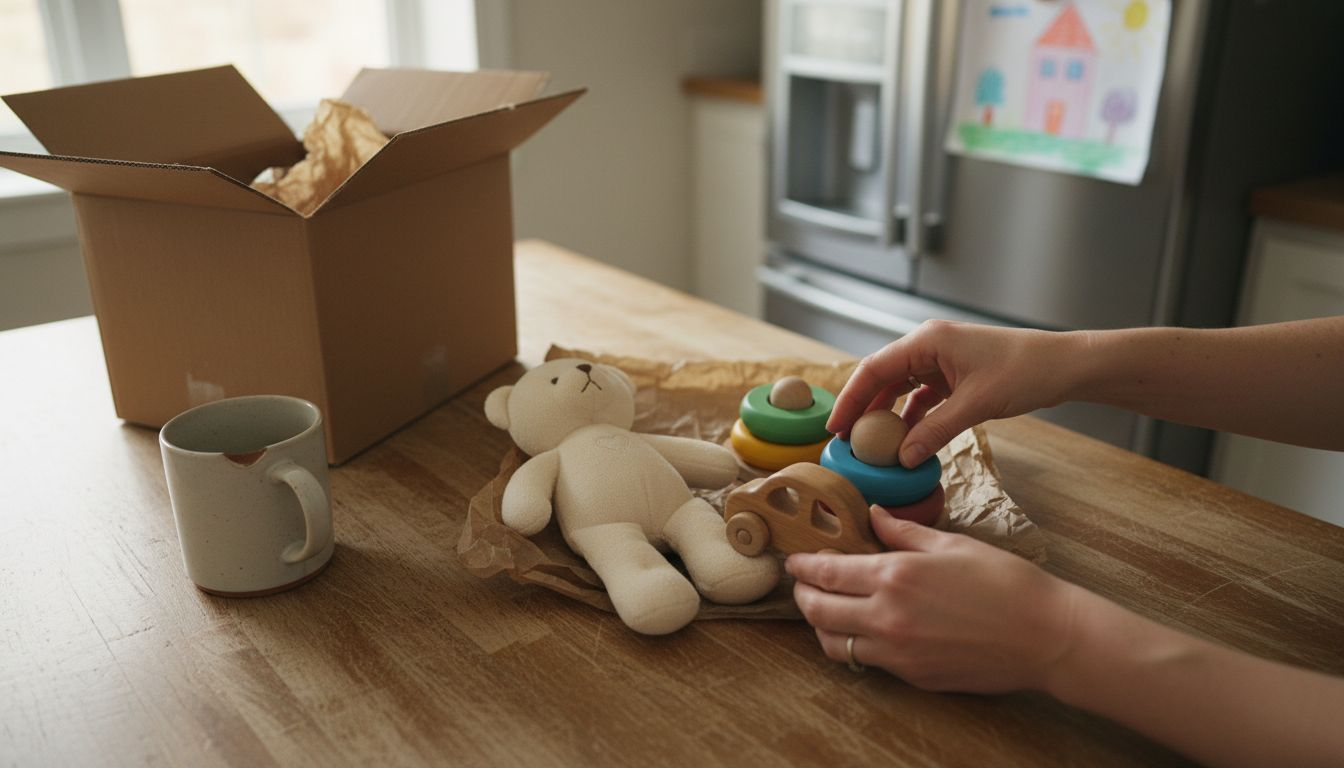
Key sustainable toy materials can be categorised as follows:
Here’s how the main sustainable toy materials compare in terms of eco-impact and safety:
| Material | Eco Impact | Safety for Children |
|---|---|---|
| Bamboo | Rapid renewability | Splinter-resistant, smooth finish |
| Organic cotton | Biodegradable, low pesticide use | Hypoallergenic and gentle |
| Recycled plastics | Reduces landfill waste | Strictly tested, non-toxic |
| Natural rubber | Renewable, compostable | Flexible and safe if natural |
-
Natural Materials:
- Sustainably sourced wood
- Organic cotton
- Natural rubber
- Bamboo
-
Recycled Materials:
- Recycled plastics
- Reclaimed ocean plastics
- Repurposed textile fibres
-
Low-Impact Synthetic Materials:
- Bio-based plastics
- Plant-derived polymers
Pro tip: When selecting sustainable toys, examine the material composition and look for certifications that validate the product’s environmental credentials.
Key Benefits for Child Development
Eco-friendly toys are far more than simple playthings; they represent powerful developmental tools that nurture children’s cognitive, emotional, and sensory growth. Sustainable play experiences engage children in multifaceted learning environments that stimulate creativity, problem-solving skills, and environmental consciousness from an early age.
The developmental benefits of eco-friendly toys extend across multiple domains of child development. Physical interaction with natural materials like wood, organic cotton, and bamboo provides rich sensory experiences that enhance fine motor skills and spatial awareness. These materials offer unique textures, weights, and interactions that mass-produced plastic toys cannot replicate, encouraging more nuanced and exploratory play patterns.
Key developmental advantages include:
-
Cognitive Development:
- Enhanced problem-solving skills
- Improved spatial reasoning
- Increased creativity and imaginative thinking
-
Sensory Learning:
- Diverse textural experiences
- Natural material interactions
- Refined tactile perception
-
Emotional Intelligence:
- Understanding environmental responsibility
- Developing empathy towards natural world
- Building connection with sustainable practices
Pro tip: Select toys that challenge your child’s current developmental stage while providing open-ended play opportunities that encourage exploration and independent thinking.
Environmental Impact and Safety Standards in the UK
The United Kingdom has been at the forefront of establishing rigorous safety and environmental standards for children’s toys. Comprehensive chemical safety research highlights the critical importance of protecting children from harmful substances while simultaneously minimising environmental impact. These standards go beyond mere compliance, representing a holistic approach to sustainable product development and child welfare.
British regulations have become increasingly stringent in addressing the environmental footprint of toy manufacturing. Sustainability metrics in the toy industry reveal a growing commitment to reducing waste, eliminating toxic materials, and promoting circular economy principles. The UK’s approach encompasses multiple dimensions of environmental responsibility, including material sourcing, production processes, and end-of-life product management.
Key environmental and safety considerations include:
-
Chemical Safety:
- Strict limits on harmful chemical additives
- Regular testing for toxic substances
- Comprehensive material screening
-
Waste Reduction:
- Promoting recyclable materials
- Encouraging sustainable manufacturing
- Supporting circular economy initiatives
-
Regulatory Compliance:
- BS EN 71 safety standards
- REACH chemical regulations
- Environmental protection guidelines
Pro tip: Always check for official safety certifications and look for toys manufactured with transparent environmental standards when making purchasing decisions.
Comparing Eco-Friendly and Conventional Toys
The distinction between eco-friendly and conventional toys extends far beyond simple material choices. Sustainable toy innovation trends reveal a fundamental transformation in how manufacturers approach toy production, design, and environmental responsibility. Conventional plastic toys, once dominant in the market, are increasingly being challenged by sustainable alternatives that prioritise child safety, longevity, and ecological impact.
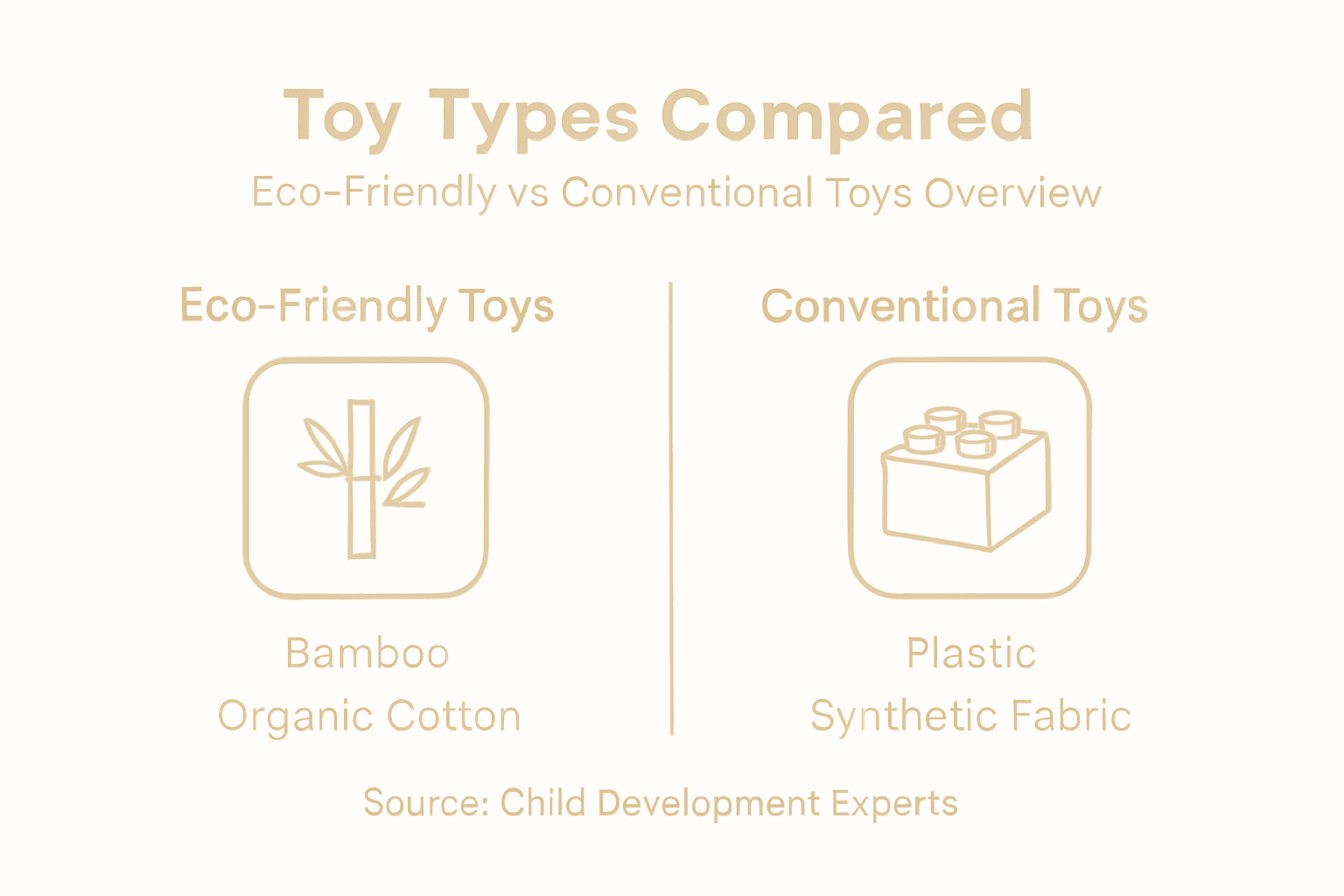
Lifecycle analysis of toy materials demonstrates stark differences between traditional and eco-friendly toy manufacturing. Conventional plastic toys typically rely on petroleum-based materials with significant environmental consequences, including extended decomposition periods and potential chemical leaching. In contrast, eco-friendly toys utilise renewable, biodegradable materials that offer superior safety profiles and reduced carbon footprints.
Key comparative aspects include:
-
Material Composition:
- Conventional: Petroleum-based plastics
- Eco-Friendly: Sustainably sourced wood, organic materials
-
Environmental Impact:
- Conventional: High carbon emissions
- Eco-Friendly: Minimal waste, biodegradable
-
Durability:
- Conventional: Often short-lived
- Eco-Friendly: Designed for longevity
-
Safety Considerations:
- Conventional: Potential chemical additives
- Eco-Friendly: Stringent non-toxic standards
Pro tip: Prioritise toys made from natural, responsibly sourced materials that offer both play value and minimal environmental impact.
Discover the Lasting Impact of Eco-Friendly Toys on Childhood Development
Choosing the right toys for your child can be challenging, especially when you want to ensure both their well-being and a positive environmental impact. The article highlights how sustainable toys made from natural and recycled materials support cognitive and sensory growth while promoting emotional intelligence through connection with nature. At Little Hive, we understand parents’ desire for durable, thoughtfully crafted toys that align with these values without compromising on timeless style or quality.
Explore our carefully curated collection of wooden toys and baby essentials at Little Hive. Each piece combines gentle aesthetics with sustainability, ideal for creating calm, nurturing spaces while fostering healthy development. Act now to bring home heirloom-quality toys and accessories that educate and inspire your little ones while supporting a greener future. Start your journey today by visiting our online store and experience childhood play that truly matters.
Frequently Asked Questions
What are eco-friendly toys made from?
Eco-friendly toys are made from sustainable materials such as responsibly sourced wood, organic cotton, natural rubber, bamboo, and recycled plastics. These materials ensure minimal environmental impact and are often safer for children.
How do eco-friendly toys contribute to child development?
Eco-friendly toys promote cognitive, emotional, and sensory growth by providing rich play experiences. They encourage creativity, problem-solving skills, and an understanding of environmental responsibility through interaction with natural materials.
Are eco-friendly toys more expensive than conventional toys?
While it was once believed that eco-friendly toys are prohibitively expensive, many options are now competitively priced with conventional toys, making them accessible to a wider audience.
What safety standards do eco-friendly toys meet?
Eco-friendly toys adhere to stringent safety standards, including limits on harmful chemical additives and regular testing for toxic substances. They comply with safety regulations to ensure that they are safe for children to use.