

Role of Wooden Toys – Impact on Calm, Creative Play
Nearly 60 percent of British families now seek out more sustainable options when buying toys for their children. The growing interest in beautifully crafted wooden toys stems from a desire to combine traditional charm with developmental benefits and elegant design. As thoughtful British parents look to enrich playtime while making eco-conscious choices, this guide uncovers what truly sets wooden toys apart, along with practical insights for nurturing creativity and calm through mindful play.
Table of Contents
- Definition And Essence Of Wooden Toys
- Types And Categories: From Blocks To Role Play
- Sensory Experience And Calming Aesthetics
- Developmental Benefits: Motor, Cognitive, Emotional
- Safety Standards, Sustainability, And Longevity
- Comparing Wooden Toys With Modern Alternatives
Key Takeaways
| Point | Details |
|---|---|
| Developmental Benefits | Wooden toys enhance motor skills, cognitive growth, and emotional wellbeing through open-ended play. |
| Safety and Sustainability | Prioritise wooden toys made from non-toxic materials and ethically sourced wood for child safety and durability. |
| Sensory Experience | The natural textures and weights of wooden toys provide a calming and engaging play experience. |
| Comparative Advantages | Wooden toys offer greater cognitive stimulation and environmental benefits compared to plastic and electronic alternatives. |
Definition and Essence of Wooden Toys
Wooden toys represent a timeless intersection of cultural heritage, artisan craftsmanship, and developmental learning. Traditional manufacturing techniques reveal these playthings as more than simple entertainment, embodying rich narrative traditions passed through generations.
At their core, wooden toys distinguish themselves through inherent qualities that mass-produced plastic alternatives cannot replicate. Handcrafted wooden items capture unique characteristics of natural materials - each grain, texture, and imperfection telling a distinct story. They emerge from deep-rooted traditions where artisans transform locally sourced softwoods into intricate play objects that stimulate a child’s imagination and sensory exploration.
The essence of wooden toys transcends mere physical construction. Developmental research highlights their profound role in children’s cognitive, emotional, and social growth. Unlike standardised plastic toys, wooden playthings encourage open-ended play, allowing children to interpret and interact with objects through their own creative lens. Their natural weight, varied textures, and organic origins invite tactile engagement that electronic or synthetic toys cannot match.
- Promote imaginative play
- Develop fine motor skills
- Encourage sensory exploration
- Connect children with natural materials
Pro tip: When selecting wooden toys, prioritise items crafted from sustainable wood sources and finished with non-toxic, child-safe treatments to ensure both environmental responsibility and child safety.
Types and Categories: From Blocks to Role Play
Wooden toys encompass a rich spectrum of play experiences, carefully categorised to support different developmental stages and learning objectives. Educational wooden toy research reveals intricate classifications that go far beyond simple playthings, offering nuanced developmental benefits for children.
Construction Toys like wooden blocks represent the foundational category, enabling children to develop spatial reasoning, hand-eye coordination, and creative problem-solving skills. These timeless play objects allow young minds to experiment with balance, symmetry, and structural design. From simple geometric shapes to complex architectural models, construction toys invite open-ended exploration that plastic alternatives cannot replicate.
Traditional wooden toy categories extend beyond construction to include role-play and imaginative toys. Wooden vehicles, kitchen sets, dolls, and miniature household items encourage children to recreate real-world scenarios, developing social understanding and emotional intelligence. Such toys mirror cultural contexts, helping children interpret and engage with their surrounding environment through imaginative play.
Key wooden toy categories include:
- Construction blocks
- Puzzles and problem-solving sets
- Role-play figurines
- Stacking and sorting toys
- Miniature life scenario sets
Pro tip: Select wooden toys that grow with your child, offering increasing complexity and challenge to maintain engagement and support continuous developmental learning.
Sensory Experience and Calming Aesthetics
Wooden toys offer a profound sensory journey that transcends typical play experiences, engaging children through their natural, tactile qualities. Psychological research on wood textures reveals the remarkable emotional and sensory impact of natural materials on human perception and interaction.
Texture and Touch play a pivotal role in wooden toy design, with each surface presenting a unique sensorial landscape. The smooth, warm grain of carefully crafted wooden objects invites gentle exploration, encouraging children to engage through touch. Unlike cold, uniform plastic surfaces, wooden toys present subtle variations - gentle ridges, soft curves, and organic textures that stimulate neural pathways and promote mindful, calm interaction.
Beyond physical sensation, wooden toys create a visual and emotional environment that supports tranquil play. Their natural hues and understated aesthetic promote a sense of serenity, contrasting sharply with the overstimulating colours and designs of mass-produced plastic alternatives. The muted, earthy tones of wood inherently communicate a sense of groundedness, helping children develop a more peaceful play experience that supports emotional regulation and focused engagement.
Key sensory attributes of wooden toys include:
- Natural temperature adaptation
- Varied surface textures
- Organic visual aesthetics
- Gentle acoustic properties
- Subtle weight and balance
Pro tip: Rotate wooden toys periodically to maintain sensory novelty and prevent sensory adaptation, keeping play experiences fresh and engaging.
Developmental Benefits: Motor, Cognitive, Emotional
Wooden toys represent a sophisticated developmental tool that supports children’s holistic growth across multiple domains. Psychological developmental research demonstrates how these seemingly simple play objects provide profound neurological and developmental stimulation.
Motor Skills Development emerges as a primary benefit of wooden toy interaction. The tactile nature of manipulating wooden objects demands precise hand movements, enhancing fine and gross motor coordination. Children must carefully balance blocks, manoeuvre puzzle pieces, and construct intricate designs, which requires developing nuanced muscle control, spatial awareness, and hand-eye coordination. Each wooden toy becomes a miniature gymnasium for physical skill refinement, encouraging deliberate, controlled movements that plastic alternatives cannot replicate.
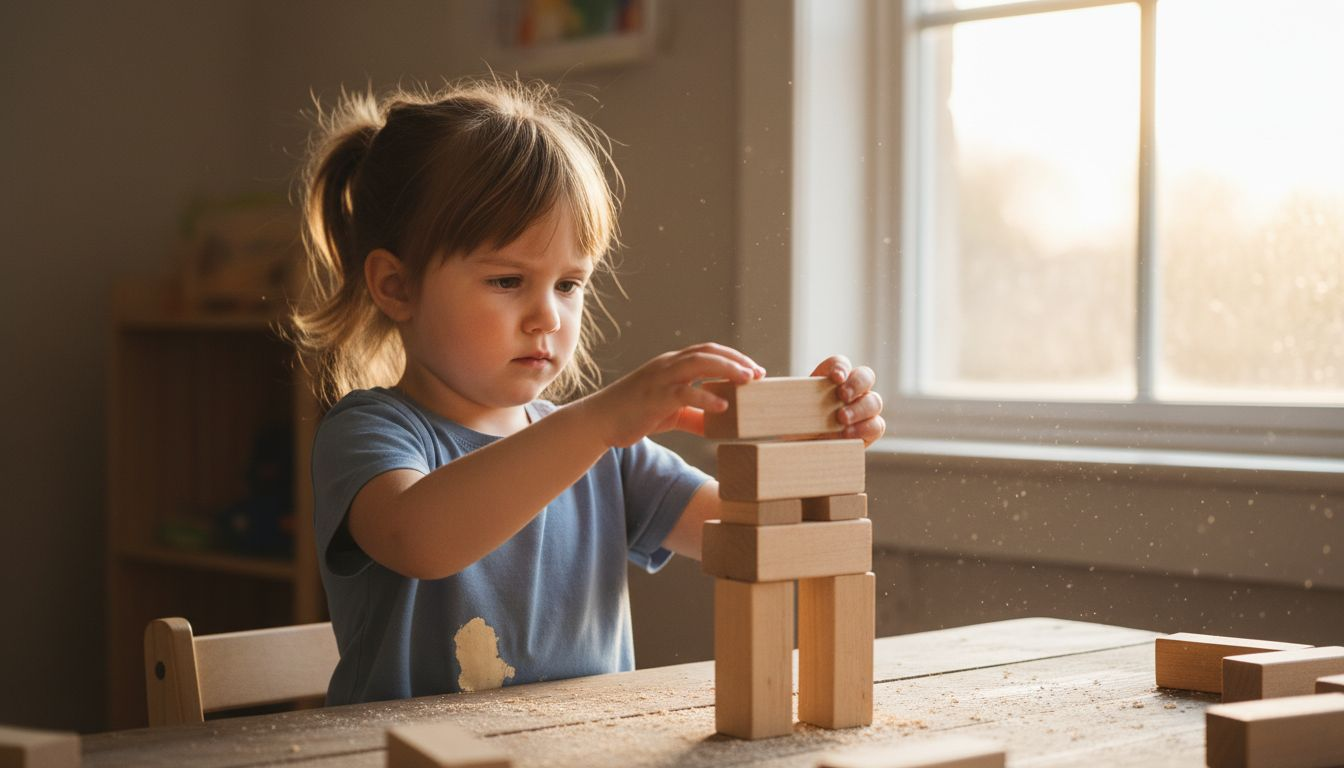
Cognitive and emotional dimensions of wooden toy engagement are equally remarkable. These toys promote sustained concentration, problem-solving skills, and creative thinking by presenting open-ended play scenarios. Unlike digital or overstimulating plastic toys, wooden playthings invite children to generate their own narratives, experiment with structural designs, and explore imaginative possibilities. This unstructured play environment supports executive function development, memory formation, and emotional regulation through calm, focused interaction.
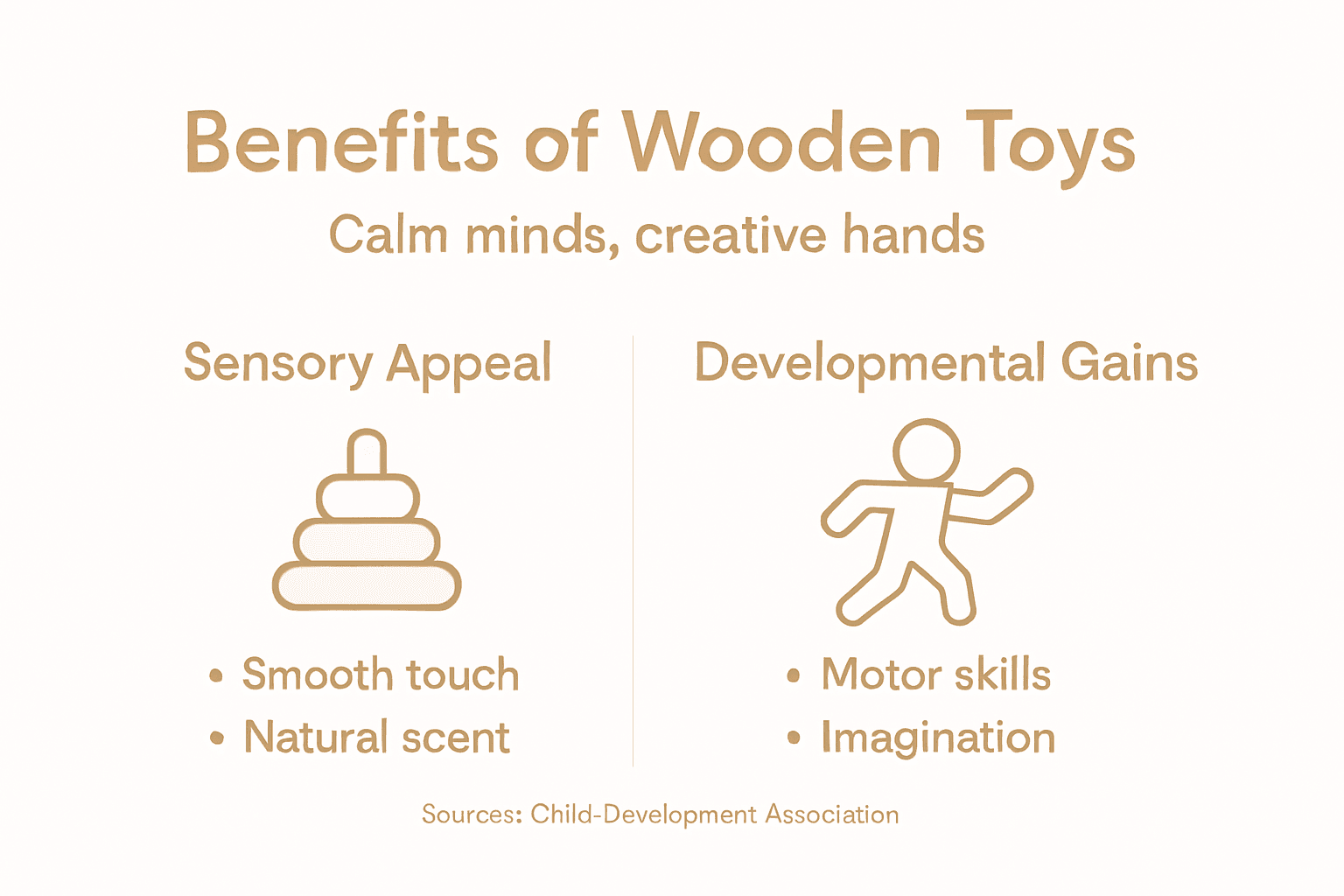
Key developmental advantages include:
The following table summarises the main benefits of integrating wooden toys into a child’s development:
| Developmental Area | Wooden Toy Impact | Unique Benefit |
|---|---|---|
| Motor Skills | Refined hand-eye coordination | Precise, intentional movement |
| Cognitive Growth | Supports creative problem solving | Fosters imaginative thinking |
| Emotional Wellbeing | Promotes calm, focused play | Aids self-regulation |
| Social Understanding | Model real-life scenarios | Encourages role play |
- Enhanced spatial reasoning
- Improved hand-eye coordination
- Increased attention span
- Emotional self-regulation skills
- Creative problem-solving capabilities
Pro tip: Introduce wooden toys gradually, allowing children to explore and discover play possibilities independently, which maximises their developmental potential.
Safety Standards, Sustainability, and Longevity
Wooden toys occupy a critical intersection of safety, environmental responsibility, and enduring quality. European toy safety regulations754600_EN.pdf) have set increasingly rigorous standards that prioritise child protection and ecological consciousness, transforming the manufacturing landscape for children’s play items.
Safety Considerations represent the foundational priority in wooden toy production. Manufacturers must meticulously select non-toxic wood treatments, ensure smooth surfaces without sharp edges, and comply with stringent chemical regulations. Unlike mass-produced plastic alternatives, quality wooden toys undergo extensive testing to eliminate potential hazards such as harmful paint pigments, splintering risks, and toxic surface treatments. The natural properties of sustainably sourced wood inherently support a safer play environment, reducing children’s exposure to synthetic chemicals and potential allergens.
Sustainable manufacturing practices have become paramount in contemporary toy design. Ethical wooden toy producers now emphasise responsible forestry, minimal environmental impact, and long-term durability. These toys transcend disposable consumer culture by offering generational longevity - a single wooden toy can be passed down through families, reducing waste and maintaining emotional and practical value far beyond typical plastic playthings.
Key safety and sustainability attributes include:
- Non-toxic material selection
- Ethical wood sourcing
- Minimal environmental impact
- Generational durability
- Compliance with international safety standards
Pro tip: Inspect wooden toys regularly for wear, checking for potential splinters or loose components to maintain their safety and extend their functional lifespan.
Comparing Wooden Toys with Modern Alternatives
Comparative research on toy materials reveals profound differences between traditional wooden toys and contemporary plastic alternatives, highlighting substantive advantages in developmental, environmental, and experiential dimensions.
Sensory and Developmental Contrast emerges as a critical distinguishing factor. Wooden toys offer nuanced, open-ended play experiences that stimulate imagination and cognitive flexibility. Unlike electronic toys with predetermined interactions, wooden playthings invite children to generate their own narratives, manipulate objects creatively, and engage in unstructured learning. Plastic toys often provide instant gratification through lights and sounds, whereas wooden toys demand more thoughtful, deliberate engagement that supports deeper cognitive processing and creative problem-solving.
Sustainable play alternatives represent another significant point of differentiation. Modern plastic toys typically emerge from petroleum-based manufacturing processes, generating substantial environmental waste. Wooden toys, conversely, represent renewable, biodegradable resources that support ecological consciousness. They transcend momentary entertainment, embodying long-term value through durability, potential intergenerational transmission, and minimal environmental impact.
Key comparative attributes include:
To better understand how wooden toys differ from plastic and electronic alternatives, review this side-by-side comparison:
| Attribute | Wooden Toys | Plastic Toys | Electronic Toys |
|---|---|---|---|
| Material Origin | Renewable natural resources | Petroleum-based polymers | Mixed electronics/plastics |
| Environmental Impact | Low, biodegradable and durable | High, non-biodegradable waste | E-waste and resource intensive |
| Play Experience | Open-ended, imaginative | Structured, predefined | Guided, instant feedback |
| Sensory Qualities | Warm, varied tactile textures | Uniform, cool surfaces | Lights, sounds, little texture |
| Longevity | Often lasts generations | Prone to wear and breakage | Short lifespan, tech obsolescence |
- Cognitive stimulation levels
- Environmental sustainability
- Durability and longevity
- Sensory engagement quality
- Manufacturing environmental footprint
Pro tip: Prioritise quality over quantity, selecting wooden toys that offer versatile play potential and can grow with your child’s developmental stages.
Embrace Calm and Creative Play with Timeless Wooden Toys
The article highlights a common challenge for parents seeking toys that promote calm, imaginative, and developmental play without overwhelming children with loud colours or electronic distractions. Wooden toys stand out for their ability to foster open-ended creativity, sensory engagement, and emotional wellbeing — precisely the qualities many families desire to cultivate in their children’s play environment. At Little Hive, we understand these needs and are proud to offer a curated collection of handcrafted wooden toys that support sensory exploration, fine motor skills, and peaceful play.
Explore our timeless selection where craftsmanship meets sustainability, making every toy an heirloom piece designed to grow with your child. Discover how thoughtful design and natural materials can transform playtime into a calming, creative experience for your family today by visiting Little Hive. Start nurturing your child’s imaginative journey with toys that truly inspire and endure.
Frequently Asked Questions
What are the developmental benefits of wooden toys?
Wooden toys support children’s motor skills, cognitive growth, emotional wellbeing, and social understanding by encouraging open-ended play that fosters creativity and concentration.
How do wooden toys promote calm play experiences?
The natural textures and aesthetics of wooden toys create a serene play environment, encouraging children to engage in mindful interaction, which aids in emotional regulation and focused engagement.
In what ways do wooden toys differ from plastic and electronic alternatives?
Wooden toys offer open-ended, imaginative play experiences, whereas plastic toys often have predetermined interactions. Additionally, wooden toys are more environmentally sustainable, being renewable and biodegradable compared to petroleum-based plastic toys.
How can I ensure the safety of wooden toys for my child?
To ensure safety, choose wooden toys made from non-toxic materials, ensure they comply with safety standards, and regularly inspect them for signs of wear or splintering.